
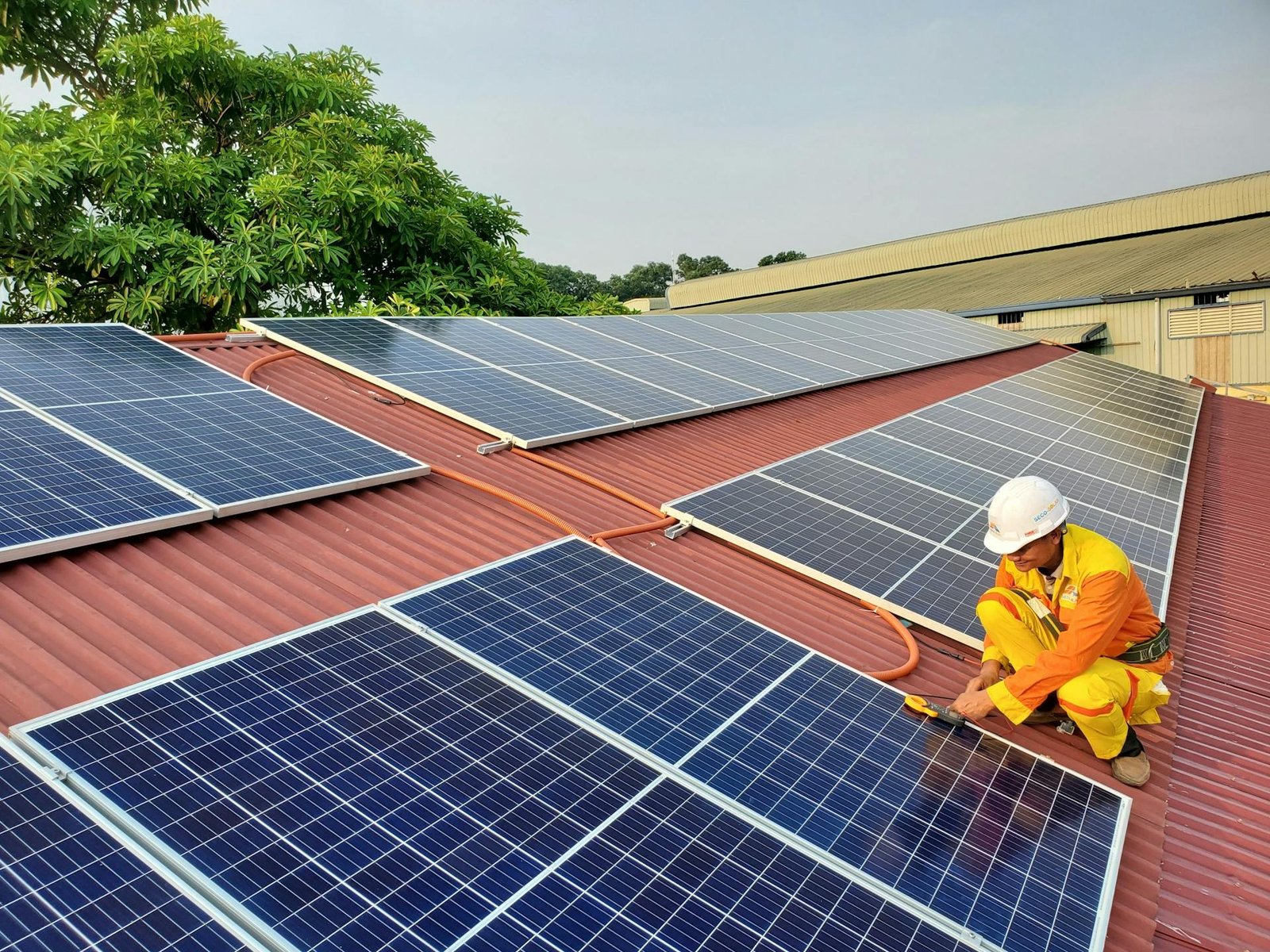
A 4-bedroom house or duplex in Nigeria rarely has a simple electricity profile. There are more rooms, more fans, often several air conditioners, a water pump or borehole, a bigger kitchen and sometimes a boys’ quarters. When people ask what solar system such a house needs, the honest answer is that it depends on how much of that load you want solar to carry.
This guide takes a different approach from a one-size-fits-all answer. Instead, it breaks the decision into three power tiers, so you can see how the inverter, batteries and panels change as your ambitions grow, and what that means for cost.
Why a 4-Bedroom House Is Harder to Size
With a smaller home, essentials make up most of the load. In a 4-bedroom house, the picture shifts for three reasons:
- More points of use. More bedrooms mean more lights, fans, televisions, chargers and often an air conditioner in each room.
- Heavier appliances. Larger homes tend to have bigger refrigerators, deep freezers, air conditioners, washing machines, water pumps and sometimes electric cookers or water heaters.
- More variation between homes. Two 4-bedroom houses can differ enormously. A household that uses fans and lights is a very different customer from one running four air conditioners.
That is why a good installer begins with your appliance list, not your floor plan.
The Three Numbers Behind Every Design
Every home solar system comes down to three calculations:
- Peak load decides the inverter size. This is the total power of everything that may run together, plus extra headroom for start-up surges from pumps, freezers and air conditioners.
- Daily energy use decides the number of panels. Panels must generate enough during daylight to run your daytime loads and recharge the batteries.
- Backup time decides the battery capacity. The batteries must store enough energy to carry your chosen loads through evening, night and cloudy spells.
If one is wrong, the others cannot rescue the system. A large inverter with small batteries will shut down early. Large batteries with too few panels will not recharge fully.
Three Power Tiers for a 4-Bedroom House
The tiers below are illustrative. They show how system size grows with ambition, not fixed recommendations. Your appliances, usage hours and location will change the numbers, so treat the ranges as a guide for your first conversation with an installer.
Tier 1: Essentials Only
What it runs: Lights, ceiling fans, televisions, refrigerator, freezer, Wi-Fi, laptops and phone charging, with no air conditioners or heavy appliances.
Typical profile: Daily energy use in the region of 7 to 10 kWh, with a modest peak load.
What it generally means for the system:
- Inverter: Often in the 5kVA range, with headroom for the freezer and refrigerator surge
- Panels: Roughly 2.5 kW to 3.5 kW of panels
- Batteries: Enough usable storage to carry evening and night essentials
Best for: Families whose main goal is to keep the house running through outages without the generator, and who plan to use air conditioners only on the grid or a generator.
Tier 2: Comfort Setup
What it runs: Everything in Tier 1, plus one or two air conditioners (often used selectively), a water pump, and a few heavier appliances such as a washing machine or microwave, with careful scheduling.
Typical profile: Daily energy use in the region of 15 to 22 kWh, with a noticeably higher peak and bigger surges.
What it generally means for the system:
- Inverter: Commonly in the higher range, such as 8kVA to 10kVA, depending on surge needs
- Panels: Roughly 5 kW to 7 kW of panels
- Batteries: A much larger bank, especially if air conditioners run at night
Best for: Households that want real comfort on solar but are willing to choose which appliances run together and when.
Tier 3: Near Whole-House Setup
What it runs: Most of the house, including several air conditioners, pumps, the kitchen loads you choose to include and the possibility of running things at the same time.
Typical profile: Daily energy use of 25 kWh or more, with a high peak load and strong surge demand.
What it generally means for the system:
- Inverter: Large capacity, sometimes more than one inverter working together
- Panels: A substantial array that needs plenty of roof or ground space
- Batteries: A large bank, which is usually the biggest cost in the project
Best for: Homes where grid supply is poor, and owners who want the house to run as normally as possible on solar and are prepared to invest accordingly.
Quick Comparison
| Tier 1: Essentials | Tier 2: Comfort | Tier 3: Near whole-house | |
|---|---|---|---|
| Air conditioners | None on solar | One or two, used selectively | Several |
| Pumps and heavy appliances | Excluded | Some, scheduled | Most included |
| Relative system size | Smaller | Medium to large | Large |
| Relative cost | Lowest | Moderate to high | Highest |
| Roof space needed | Modest | Considerable | Substantial |
| Expansion later | Often possible | Often possible | Plan carefully from the start |
Figures and descriptions are indicative only. A load assessment gives the real answer for your home.
What Air Conditioners Do to a 4-Bedroom Design
For most 4-bedroom houses, air conditioners are the deciding factor in system size and cost.
Depending on the type and size, one unit can draw around a kilowatt or more while running, and a night’s use can consume more energy than all your essential loads combined. With several units in a 4-bedroom house, the load climbs fast.
Some practical ways to manage that:
- Choose inverter-type air conditioners. They generally use less power than older fixed-speed models.
- Run them selectively. Cooling only the rooms in use, rather than every bedroom at once, shrinks the peak load.
- Use solar generation in the daytime. Air conditioners used during sunny hours can run largely off the panels, reducing battery demand.
- Stage the investment. Many owners start with Tier 1 or 2 and expand once they see how the system performs.
Planning for Pumps, Kitchens and Boys’ Quarters
A larger house often adds loads that are easy to overlook:
- Water pumps and borehole pumps can draw several times their running power at start-up. Tell your installer the pump’s exact rating.
- Electric cookers, ovens, kettles and water heaters consume large amounts of power. Many homeowners keep them off the solar circuit, or include them only in Tier 3 designs.
- Boys’ quarters and outbuildings can be put on the same system or a separate one. Decide early, as it affects cabling and capacity.
- Security lights, CCTV, gate motors and electric fences run through the night and add to battery demand.
Choosing the Inverter
The inverter converts DC from panels and batteries into AC for your appliances and manages power flow between panels, batteries and, in hybrid setups, the grid or generator.
For a 4-bedroom house, look beyond the kVA figure:
- Can it handle the start-up surge of your pump, freezer and air conditioners?
- Is it compatible with the batteries and panels you plan to use?
- Can it expand later, for example by adding another inverter or more panels?
- What protection and warranty come with it?
A large inverter does not make up for undersized batteries or panels. The three must be matched.
Choosing the Batteries
Batteries are often the biggest single cost in a 4-bedroom system, and they determine how the system feels in daily life.
Lithium batteries are popular for their longer service life and the larger usable share of their rated capacity, while other types may suit different budgets. Whatever you choose, battery capacity should match the energy you need after sunset, not a round number.
Too little, and backup ends early in the night. Too much, and you pay for storage you will rarely use. For larger homes, it also helps to ask how the battery bank can be expanded and how it is protected and ventilated.
Choosing the Panels
The number of panels depends on your daily energy use, the wattage of each panel, local sunlight and available space. A larger system needs more roof or ground area, so it is worth checking this early.
Good installation matters as much as quantity. Panels should face the right direction, avoid shade from trees, walls and water tanks, be fixed securely against wind and rain, and be easy to access for cleaning.
How Much Does a Solar System for a 4-Bedroom House Cost in Nigeria?
Nobody can give an honest single price for “a 4-bedroom house” without knowing your appliances. Between Tier 1 and Tier 3, the cost can differ by several times.
The main cost factors are:
- Inverter capacity, which grows with peak load and surge needs
- Number and wattage of panels, which grows with daily energy use
- Battery type and capacity, usually the largest cost
- Mounting structures, cables, breakers, surge protection and earthing
- Installation complexity, including roof type, cable distances and equipment location
- Equipment brand, quality and warranty
Equipment prices in Nigeria can also move with exchange rates and market conditions, so a figure from a few months ago may no longer apply. The reliable way to get a real number is a current quotation based on your actual appliance list.
To control cost without sacrificing reliability, you can leave the heaviest appliances off the solar circuit, choose energy-efficient appliances, accept fewer backup hours, or start smaller with a design that can be expanded.
Common Mistakes with Larger Homes
- Sizing by number of rooms. Bedrooms do not equal load.
- Underestimating air conditioners. They are the most common reason a system falls short.
- Buying a big inverter first. Without matching batteries and panels, it cannot deliver.
- Forgetting pump surges. A pump that works fine on the grid can trip an undersized inverter.
- Not planning roof space. Bigger systems need more space, and shading can ruin output.
- Comparing quotes on price alone. Similar-looking quotes may differ in battery capacity, equipment quality and protection components.
- Skimping on installation. Poor wiring, weak earthing and missing surge protection cause failures and safety risks.
- Not planning for expansion. If you may add appliances later, say so at the start.
How to Prepare for an Accurate Quotation
You will get a faster and more precise recommendation if you come prepared:
- List every appliance you want solar to run, with its power rating (usually on a label).
- Note roughly how many hours a day each one runs.
- Decide how many backup hours you want in the evening and at night.
- Mention any appliances you plan to add, such as another air conditioner or a bigger freezer.
- Share roof details if you can, such as the type, direction and any shade.
Get a System Designed Around Your House
At PA DigiTech Solar, we design and install solar panels, inverters and battery systems for homes and businesses across Nigeria. We start with your real appliances and usage, so the system we recommend fits how your household actually lives, whether you need an essentials setup, a comfort system or something close to whole-house power.
If you own or are building a 4-bedroom house and want to know which tier makes sense, we can help you work it out. Call PA DigiTech Solar on 07068853073 to discuss your requirements.
Frequently Asked Questions
What size solar system do I need for a 4-bedroom house in Nigeria?
It depends on your appliances, their ratings, how long they run and your backup time. A house running only essentials needs a far smaller system than one running several air conditioners, pumps and heavy appliances.
Is a 5kVA inverter enough for a 4-bedroom house?
It can be for essentials such as lights, fans, television, refrigerator and freezer. If you want to run air conditioners, pumps or other heavy appliances, you will often need a larger inverter. A load assessment will confirm it.
Do I need a 10kVA inverter for a 4-bedroom house?
Only if your peak load and surge demands call for it. Some 4-bedroom houses do, particularly with several air conditioners or pumps, while others do not. The load decides, not the room count.
How many solar panels does a 4-bedroom house need?
It depends on your daily energy use, panel wattage, local sunlight and available space. The number should be calculated from your load, not guessed.
How many batteries do I need?
That depends on how much energy you want stored for evening and night use, and on the battery type and capacity. Your installer should calculate it from your usage.
How much does solar cost for a 4-bedroom house in Nigeria?
The cost depends on inverter capacity, number of panels, battery type and capacity, and installation requirements. Call PA DigiTech Solar on 07068853073 for a quotation based on your real needs.
Can solar run all the air conditioners in a 4-bedroom house?
It is possible with a properly designed system, but it needs a larger inverter, more panels and a much bigger battery bank. Many owners run selected air conditioners on solar and add more later.
Can I run my whole house on solar?
Yes, with a system sized for it, but this is the most expensive tier. Many homeowners begin with essentials or a comfort setup and expand.
Can solar run a borehole or water pump?
Yes, but pumps have high start-up demand, so the inverter must be chosen accordingly. Tell your installer the pump rating.
How long do solar batteries last?
It depends on battery type, quality, usage and configuration. Lithium batteries are generally known for a longer service life than many traditional types.
Can I start small and expand later?
Often yes, if the original system was designed with expansion in mind. Mention your future plans during the consultation.
Will solar work during the rainy season?
Yes, but output is lower on heavily overcast days. A good design allows for this with suitable battery capacity and, if needed, a grid or generator backup.
How do I get a solar quotation for my house?
List the appliances you want to power, then call PA DigiTech Solar on 07068853073.
Conclusion
A solar system for a 4-bedroom house in Nigeria is not a fixed package. It is a design built from your peak load, daily energy use and backup time, and the biggest influence on all three is how many air conditioners and heavy appliances you want to run. Decide which tier suits you, be honest about your appliances, and insist on a quotation that explains what you are paying for.
Ready to find out what your house needs? Call PA DigiTech Solar on 07068853073.