
Reliable electricity is important for almost every home and business in Nigeria. From keeping household appliances running to ensuring that shops, offices, schools, hospitals and other businesses can continue operating, access to dependable power can make a significant difference.
With the continuing need for alternative power solutions, solar energy has become an increasingly practical option for Nigerians looking to reduce their dependence on the public electricity supply and petrol or diesel generators.
However, buying solar panels, an inverter and batteries is only part of the process. A solar system needs to be properly assessed, designed, sized, installed and configured to perform reliably. Choosing the wrong equipment or having a system poorly installed can result in inadequate backup, unnecessary expenses and equipment problems.
This is where professional solar installation services become important.
At PA DigiTech Solar, we provide solar installation services for homes and businesses, helping customers choose and install solar power systems based on their actual electricity requirements.
What Is Solar Installation?
Solar installation is the process of designing and setting up a solar power system that can generate, store and supply electricity to a property.
A typical solar power system may include solar panels, a solar inverter, batteries, protective devices, mounting structures, cables and other electrical components. The exact components and capacity depend on the customer’s electricity needs, available space, budget and the type of system required.
A professional installation involves more than simply mounting panels on a roof and connecting an inverter. The installer needs to understand the electrical load of the property, determine the appropriate inverter and battery capacity, calculate the required solar panel capacity, install the system safely and test everything before handing it over to the customer.
This is why professional solar system installation is an important part of getting good performance and value from your investment.
Why More Nigerian Homes and Businesses Are Considering Solar Power
For many property owners, the attraction of solar power is not simply that it uses renewable energy. It is also about having a more dependable alternative when the public electricity supply is unavailable.
A properly designed solar system can provide backup power for essential appliances and equipment while reducing reliance on generators.
For a home, this could mean keeping lights, televisions, refrigerators, freezers, fans, computers and other selected appliances running during power interruptions.
For a business, solar power can help maintain essential operations, protect equipment and reduce the disruption caused by unreliable electricity.
Solar systems can also operate quietly compared with conventional generators, making them suitable for residential properties, offices and other environments where generator noise and fumes can be a concern.
What Does a Solar Power System Consist Of?
The components required depend on the type and size of the installation, but most complete solar systems contain several key parts.
Solar Panels
Solar panels capture energy from sunlight and convert it into electrical energy. The amount of solar energy that can be generated depends on factors such as the number and capacity of panels, available sunlight, panel orientation, shading and installation conditions.
The panels need to be properly positioned and securely mounted to ensure that they can operate effectively and withstand local weather conditions.
Solar Inverter
The inverter is one of the most important components of a solar power system.
Solar panels produce DC electricity, while most household and commercial appliances use AC electricity. The inverter converts the electricity into a form that can be used by appliances while also managing energy from the solar panels, batteries and, depending on the system, the public electricity supply or generator.
The appropriate inverter capacity depends on the electrical loads that the system is expected to support.
Solar Batteries
Batteries store electrical energy for use when solar generation is insufficient, particularly at night or during periods of limited sunlight.
Battery capacity is an important part of solar system design. A system with insufficient battery storage may not provide the desired backup time, while unnecessarily large battery storage can increase the overall cost of the installation.
Lithium batteries and other battery technologies are available, with the most suitable option depending on the customer’s requirements, budget and expected usage.
Mounting Structures
Solar panels need appropriate mounting structures to keep them securely positioned. Depending on the property, panels may be installed on a roof or on a suitable ground-mounted structure.
The mounting arrangement should take into account the condition of the installation surface, panel positioning, wind exposure and accessibility for maintenance.
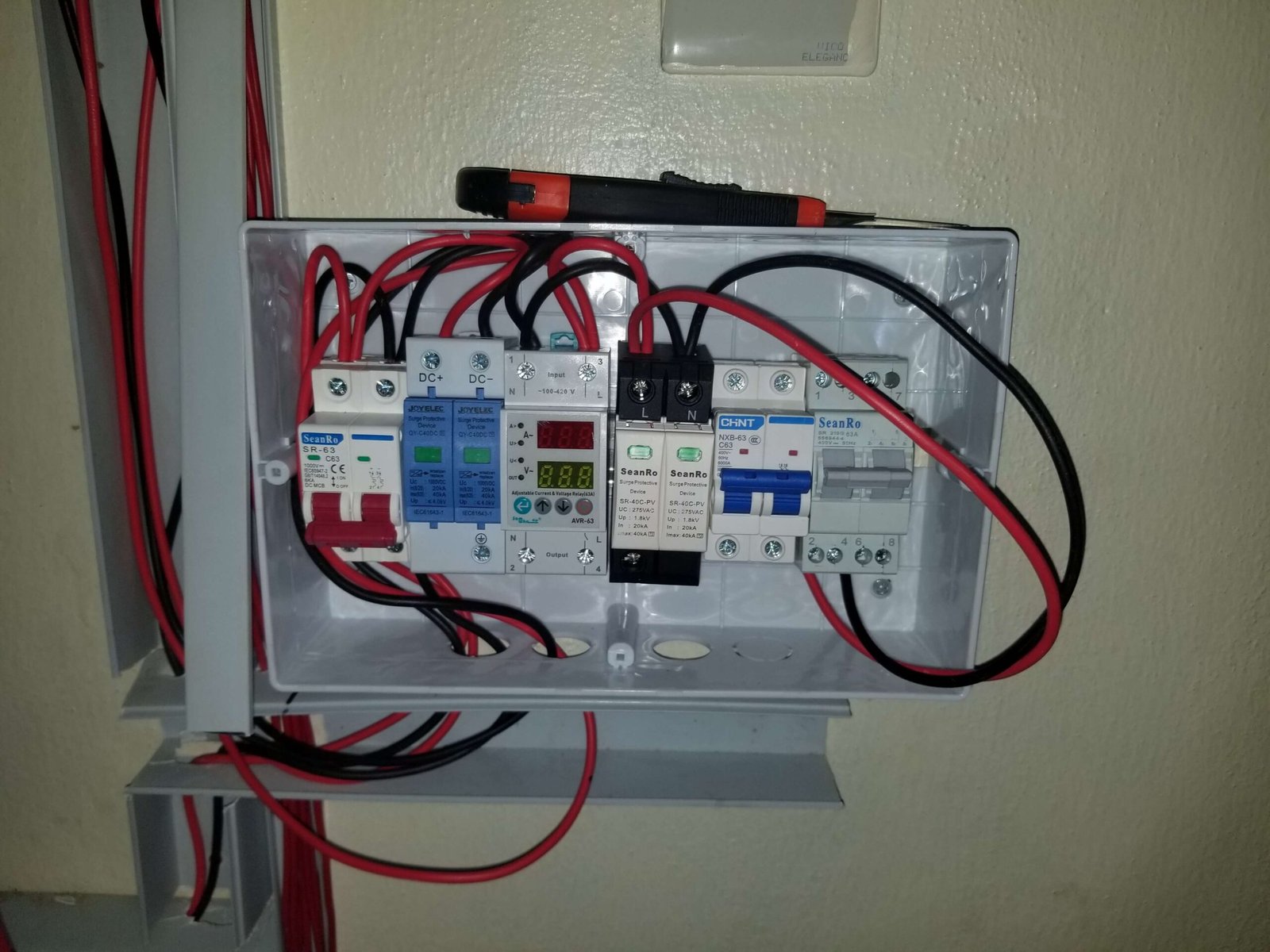
Protection and Electrical Components
A properly installed solar system also requires appropriate electrical protection and switching equipment.
Depending on the system, this may include circuit breakers, isolators, surge protection, earthing and other protective components.
These components help protect the system and property from electrical faults and other risks.
Why Proper Solar System Sizing Matters
One of the biggest mistakes a customer can make is buying a solar system simply because someone recommends a particular inverter size.
A 5kVA inverter, for example, does not automatically mean that it is suitable for every home. Two houses may have completely different electricity requirements even if they are similar in size.
One household may use only lights, fans, a television, refrigerator and freezer. Another may also operate air conditioners, water pumps, washing machines, microwave ovens and other high-power appliances.
The system therefore needs to be designed around the actual load.
A proper assessment should consider the appliances you want to power, their power ratings, how long they are normally used and which appliances need to operate simultaneously.
Battery requirements also need to be considered. If you want your system to provide several hours of backup at night, for example, the battery capacity needs to reflect the expected energy consumption.
This is why professional load assessment and system sizing should take place before equipment is purchased.
Solar Installation for Homes in Nigeria
Residential solar installation can be designed for different types of homes, from smaller apartments to larger houses and duplexes.
The system can be designed to power essential appliances or a much larger proportion of the property’s electrical load.
For a smaller home, the priority may be lighting, fans, television, refrigerator, freezer, internet equipment and other essential appliances.
A larger home may require a higher-capacity inverter, additional solar panels and a larger battery bank to support more demanding appliances.
Air conditioners deserve particular attention during system design because they can significantly increase the electrical load. The same applies to water pumps, electric cookers, heating equipment and other high-consumption appliances.
Rather than choosing a system based solely on the number of bedrooms in a house, the better approach is to assess the appliances and expected usage.
Solar Installation for Businesses
Businesses often have different requirements from residential customers.
An office may need to power computers, networking equipment, lighting, printers and air conditioning. A shop may need lighting, refrigeration and electronic equipment. A hotel, school, clinic, restaurant or workshop can have considerably larger and more complex electrical requirements.
For commercial solar installation, the installer needs to understand not only the total load but also how the business uses electricity throughout the day.
Solar panels can generate electricity during daylight hours, while batteries can store energy for later use. Depending on the system design, the public grid or a generator may also form part of the overall power arrangement.
A properly designed commercial solar system can therefore become part of a broader energy strategy rather than simply serving as emergency backup.
How the Solar Installation Process Works
A professional solar installation should begin with an assessment rather than immediately purchasing equipment.
1. Understanding Your Power Requirements
The first step is to determine what you want the solar system to power.
An installer may ask for a list of appliances, their ratings and the approximate number of hours they are used each day.
This information helps establish the expected electrical load and energy consumption.
2. Load Assessment and System Sizing
The information gathered is then used to determine an appropriate inverter capacity, battery capacity and solar panel capacity.
This stage is particularly important because the different parts of the system need to work together.
The goal is not simply to install the biggest possible system. It is to install a system that is appropriate for the customer’s requirements and budget.
3. Selecting the Equipment
Once the system requirements have been established, suitable components can be selected.
The installer should consider factors such as equipment specifications, compatibility, expected usage, available space, warranty and future expansion.
4. Site Assessment
The installation location should be examined before work begins.
For solar panels, this includes assessing the available roof or ground area, potential shading, mounting conditions and cable routing.
For the inverter and batteries, the installer needs to consider suitable positioning, ventilation, accessibility and protection.
5. Installation
The panels, inverter, batteries and associated electrical components are installed and connected according to the system design.
Good workmanship is important at this stage because poor connections, unsuitable cables or inadequate protection can affect system performance and safety.
6. Testing and Commissioning
After installation, the system should be tested to confirm that the different components are operating correctly.
The installer should check the inverter, batteries, solar input, electrical connections and protection equipment before the system is handed over.
The customer should also understand the basic operation of the system, including how to monitor it and what to do if a fault occurs.
How Much Does Solar Installation Cost in Nigeria?
There is no single price for solar installation in Nigeria because the cost depends on the size and specification of the system.
A small residential backup system will naturally cost less than a large system designed to power a bigger home or commercial property.
Some of the factors that influence the total cost include the inverter capacity, number and wattage of solar panels, battery type and capacity, mounting equipment, cables, protective devices, installation requirements and the complexity of the property.
The customer’s required backup time can also significantly affect the system design because longer backup generally requires greater battery storage.
For this reason, it is better to obtain a quotation based on your actual electricity requirements rather than relying entirely on a generic package advertised online.
If you are unsure what size system you need, PA DigiTech Solar can help assess your requirements and recommend a suitable solution.
Solar Installation Enquiries: PA DigiTech Solar, 07068853073
How to Choose a Solar Installation Company in Nigeria
Choosing the right installer is just as important as choosing the equipment.
Before hiring a solar installer, consider their experience, previous projects, understanding of solar system design and willingness to assess your actual electricity requirements.
Ask questions about the equipment being proposed and make sure you understand what is included in the quotation.
It is also useful to request photographs or details of previous installations where available. A professional installer should be able to explain the proposed system in terms that you can understand rather than simply giving you an inverter size and a price.
The installation itself also matters. Even quality solar equipment can perform poorly if it is incorrectly installed.
Look for an installer who considers proper wiring, electrical protection, earthing, equipment positioning, cable management and system testing as part of the job.
Common Solar Installation Mistakes to Avoid
One common mistake is buying equipment before determining the actual load.
Another is choosing an inverter based purely on its advertised capacity without considering battery storage and solar panel requirements.
Customers can also overlook future electricity needs. If you are planning to add air conditioners, a freezer, a water pump or other major appliances, it may be worth considering this during the initial system design.
Poor installation can create another set of problems. Incorrect connections, inadequate protection and poorly positioned equipment can affect both performance and reliability.
Finally, avoid comparing solar quotations based only on price. Two systems may have similar-looking specifications but use different equipment, battery capacities, protection components and installation standards.
The better comparison is to look at exactly what each quotation includes.
Solar Installation, Inverter Installation or a Complete Solar System?
These terms are sometimes used interchangeably, but they can refer to different services.
Inverter installation may involve installing an inverter and battery system to provide backup power.
Solar panel installation involves installing photovoltaic panels and integrating them into an electrical system.
A complete solar system installation normally involves integrating solar panels, an inverter, battery storage and the necessary electrical and protection components into one system.
The right option depends on your electricity requirements.
If your primary concern is backup power, an inverter and battery system may be sufficient for your needs. If you want to generate and store your own electricity from sunlight, a complete solar system may be more appropriate.
A professional assessment can help determine which option makes sense for your property.
Solar Installation for Lagos, Ibadan and Other Nigerian Cities
Solar power can be used in homes and businesses across Nigeria, but each installation still needs to be assessed according to its individual site and electricity requirements.
At PA DigiTech Solar, customers looking for solar installation services can discuss their requirements before deciding on the appropriate system.
Whether you need solar power for a home, office, shop or other property, it is important to consider the actual appliances you want to operate, the expected backup period and your available installation space.
If you are based in Lagos, Ibadan or another location and would like to discuss your requirements, contact PA DigiTech Solar on 07068853073 to enquire about solar installation services.
Benefits of Professional Solar Installation
A professionally designed and installed solar system can provide several benefits.
The most obvious is greater control over your electricity supply. Instead of depending entirely on the public grid or a fuel-powered generator, solar allows you to generate and store electrical energy for your own use.
Solar systems also operate quietly, which makes them attractive for residential properties and businesses.
Proper system design can help ensure that the inverter, batteries and solar panels are appropriately matched to the expected load.
Professional installation also gives you someone to contact when you need assistance with system maintenance, troubleshooting or future upgrades.
Perhaps most importantly, proper installation helps you get the best practical use from the equipment you have purchased.
Is Solar Power Worth Installing in Nigeria?
Whether solar power is worthwhile depends on your electricity requirements, current energy costs, available budget and what you expect the system to achieve.
For someone who experiences frequent power interruptions and spends heavily on generator fuel, solar may offer an opportunity to reduce generator dependence.
For a business where power interruptions can affect operations, productivity or equipment, the value of reliable backup can extend beyond simply reducing electricity costs.
However, solar should be approached as an investment that requires proper planning. The cheapest system is not necessarily the most suitable, and the largest system is not necessarily the best either.
The objective should be to install the right system for your actual needs.
Get Professional Solar Installation Services in Nigeria
A solar power system is a significant investment, so it is worth taking the time to understand your electricity requirements before buying equipment.
From load assessment and system design to solar panel installation, inverter installation, battery setup and system testing, each stage can affect the performance of the finished installation.
Whether you need a residential solar system for your home or a larger solution for a business, professional installation can help ensure that the system is designed around the way you actually use electricity.
If you are considering solar installation in Nigeria and would like to discuss your requirements, PA DigiTech Solar can help you determine a suitable solution.
Call PA DigiTech Solar on 07068853073 to discuss your solar installation requirements.
Frequently Asked Questions About Solar Installation in Nigeria
How much does solar installation cost in Nigeria?
The cost depends on the size of the system, inverter capacity, solar panel capacity, battery type and capacity, installation requirements and the appliances you want to power. A proper assessment is required before an accurate quotation can be prepared.
What size solar inverter do I need for my home?
The appropriate inverter size depends on your total electrical load and the appliances you intend to operate simultaneously. A load assessment should be carried out before selecting an inverter.
Can solar power run air conditioners?
Yes, a properly designed solar system can power air conditioners. However, air conditioners can consume considerable electricity, so their power rating and usage pattern need to be included when sizing the inverter, solar panels and battery storage.
How many solar panels do I need?
The number of panels depends on the inverter and solar system design, panel wattage, expected energy consumption and available sunlight. The required panel capacity should be calculated as part of the overall system design.
Can solar work when there is no electricity from the grid?
Yes. Depending on the system configuration, solar panels and batteries can provide electricity without relying on the public grid. A hybrid system can also combine solar, battery storage and the grid or generator.
How long does solar installation take?
Installation time varies according to the size and complexity of the system, the property and the equipment being installed. A straightforward residential installation will generally be quicker than a large commercial project.
Do solar systems require maintenance?
Yes. Although solar systems can operate for many years, periodic inspection and maintenance can help identify potential problems and keep the system operating properly. Panels may also need cleaning depending on the installation environment.
How do I get a solar installation quotation?
Start by preparing a list of the appliances you want to power, including their ratings if available. You can then contact PA DigiTech Solar on 07068853073 to discuss your requirements and arrange the next step.
Conclusion
Solar energy can provide Nigerian homes and businesses with a practical alternative source of electricity, but the success of a solar installation depends heavily on proper planning and installation.
The right system should be based on your actual electricity requirements, not simply on a package or inverter size. Proper load assessment, equipment selection, installation, protection and testing all contribute to the performance and reliability of the finished system.
If you are ready to explore solar power for your home or business, speak with PA DigiTech Solar on 07068853073 about your requirements and get professional guidance on the right solar installation for your property.