
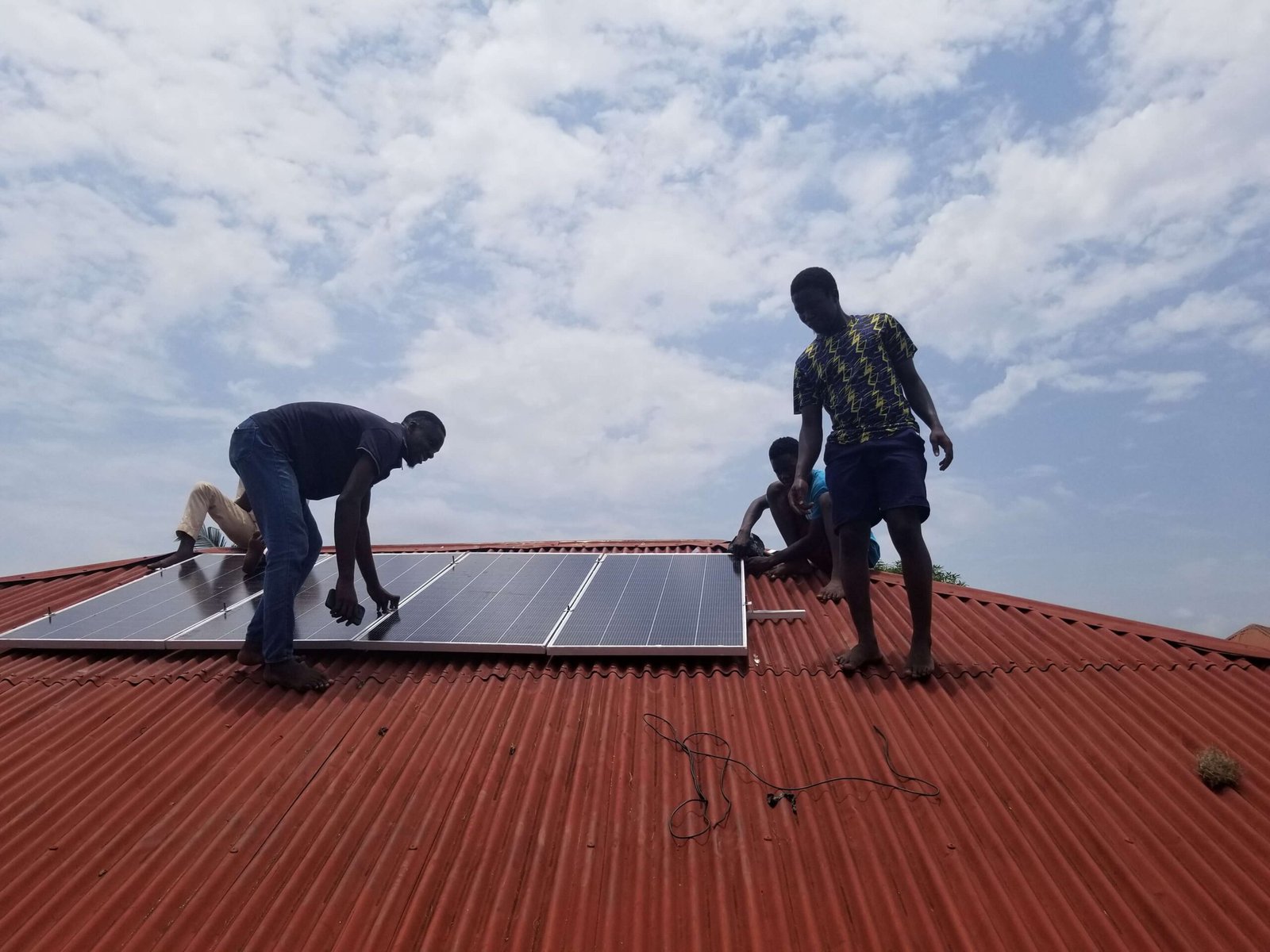
Solar energy has become an increasingly practical option for Nigerian homes, businesses and organisations looking for a more reliable way to generate electricity. With the right solar panels, supporting equipment and professional installation, a property can generate useful electrical energy from sunlight and reduce its dependence on conventional sources of power.
However, getting good results from solar panels involves much more than buying a few panels and placing them on a roof. The panels need to be correctly selected, positioned, mounted, wired and integrated with the rest of the solar power system.
A poorly planned installation can reduce energy production, create unnecessary maintenance problems and affect the performance of other components such as the inverter and batteries.
At PA DigiTech Solar, we provide professional solar panel installation services for residential and commercial properties in Nigeria. Our approach is to consider the customer’s electricity requirements, available installation space and overall solar system design before determining the appropriate solar panel arrangement.
If you are considering installing solar panels for your home, office, shop or business, this guide explains what you should know before starting your project.
What Are Solar Panels?
Solar panels, also known as photovoltaic or PV panels, are devices that convert sunlight into electrical energy.
Individual solar cells inside the panel respond to sunlight and generate direct current electricity. Multiple cells are connected together to form a panel, while several panels can be combined into a solar array to achieve the required power output.
The electricity generated by the panels can then be used as part of a complete solar power system.
In a typical installation, the solar panels work alongside an inverter, batteries and other electrical components. The inverter converts the electricity into a form suitable for the property’s electrical loads, while batteries can store energy for later use where battery storage is included.
Why Solar Panel Installation Requires Proper Planning
Solar panels may look relatively simple from the outside, but the performance of an installation depends on several factors.
The available roof or ground space, shading, panel orientation, installation angle, panel capacity, wiring arrangement and inverter specifications can all influence the amount of useful electricity the system produces.
Nigeria has a strong solar resource, although the available solar radiation varies geographically and seasonally. The Sokoto Energy Research Centre, under the Energy Commission of Nigeria, notes that average daily solar radiation varies from roughly 4 kWh/m²/day in southern Nigeria to around 7 kWh/m²/day in the far North.
This means that solar panels can be a viable power-generation option in different parts of the country, but the system still needs to be designed for the specific property.
Residential Solar Panel Installation in Nigeria
For homeowners, solar panel installation can form part of a complete home solar power system.
A residential solar installation may be designed to provide electricity for essential household appliances or to support a much larger proportion of the home’s electricity demand.
The appliances that need to be powered could include lighting, fans, televisions, refrigerators, freezers, computers, internet equipment, water pumps and air conditioners.
The important point is that the number of solar panels required cannot be determined simply by looking at the number of rooms in a house.
A three-bedroom house with relatively low electricity consumption can have very different requirements from a three-bedroom house with multiple air conditioners, freezers, pumps and other high-consumption appliances.
The solar panel array should therefore be designed around the household’s actual energy requirements.
Commercial Solar Panel Installation
Businesses can also benefit from properly designed solar PV systems.
Commercial solar panel installations can be used for offices, shops, schools, hotels, restaurants, warehouses, workshops, healthcare facilities and other business premises.
Commercial properties often have higher and more consistent daytime electricity consumption than residential properties. This can make solar generation particularly useful because electricity produced by the panels can potentially be used directly by the business during operating hours.
Larger commercial installations may require significantly more panels, larger inverter capacity and additional engineering considerations compared with a typical residential installation.
For this reason, commercial solar panel installation should begin with a proper assessment of the property’s electrical demand and available installation area.
How Solar Panels Work With an Inverter
Solar panels generate DC electricity, while most conventional household and commercial appliances use AC electricity.
This is where the inverter becomes important.
The solar panels send generated DC electricity to the solar inverter. The inverter converts and manages the electrical energy so that it can be used by the property’s electrical system.
Depending on the system design, excess energy can also be used to charge batteries for later use.
This means that solar panels and the inverter need to be compatible. Installing a large number of panels without considering the inverter’s solar input specifications can create an unsuitable system.
Professional system design therefore considers the panels and inverter as parts of one integrated installation.
How Many Solar Panels Do You Need?
There is no single number of solar panels that is suitable for every property.
The required number depends on several factors, including:
- The total electricity demand
- Desired solar generation
- Panel wattage
- Available roof or ground space
- Inverter specifications
- Battery requirements
- Expected sunlight conditions
- Shading and installation conditions
For example, a system using higher-wattage panels may require fewer individual panels to achieve a particular total panel capacity than a system using lower-wattage panels.
The important figure is therefore not simply the number of panels but the total installed solar capacity and how that capacity fits into the overall system design.
Choosing the Right Solar Panels
Not all solar panels have identical specifications.
When selecting panels, an installer should consider factors such as rated power, efficiency, physical dimensions, electrical characteristics, warranty and compatibility with the rest of the system.
The physical size of the panels also matters.
A property may have sufficient total roof area for the required capacity, but the roof shape, obstacles, water tanks, roof structures or other equipment can affect how many panels can actually be installed.
Panel selection should therefore balance electrical performance with the physical characteristics of the site.
Roof Assessment Before Solar Panel Installation
The roof is one of the most common locations for residential solar panels, but not every roof is automatically suitable.
Before installation, the available area should be inspected.
The installer should consider the condition of the roof, available mounting space, potential shading, access, panel positioning and the proposed cable route.
A roof that appears large enough from ground level may have limited usable space once obstacles and shading are taken into account.
Roof condition is another important consideration. If major roof repairs or replacement are already planned, it may be sensible to address those issues before installing a solar panel array.
The aim is to avoid a situation where panels have to be removed shortly after installation because of roof work.
Solar Panel Orientation and Positioning
Where solar panels are installed can have a major influence on their energy production.
The panels should be positioned to receive useful sunlight while avoiding unnecessary shading.
Nearby buildings, trees, water tanks, walls, satellite dishes and other structures can cast shadows onto the panels.
Even when only part of an array is shaded, the impact can vary depending on the panel arrangement and system design.
A professional site assessment should therefore identify potential shading throughout the day rather than looking at the roof only once.
Why Shading Matters
Solar panels need sunlight to generate electricity, so shading can reduce the output of an installation.
A tree that casts a shadow over part of the roof in the morning, for example, may affect generation during that period.
The same can happen with neighbouring buildings or structures that block sunlight at different times.
This is why a solar installer should examine the surrounding environment before finalising the panel layout.
If shading cannot be avoided, the system may need to be designed accordingly using an appropriate panel arrangement and suitable electrical equipment.
Ground-Mounted Solar Panels
Not every property needs to have solar panels installed on the roof.
Where sufficient land is available, a ground-mounted solar array may be an alternative.
Ground-mounted systems can provide easier access for inspection and maintenance, depending on the site. They can also offer more flexibility when the roof is unsuitable or does not have enough usable space.
However, ground installations require appropriate mounting structures and adequate protection from environmental and physical risks.
The choice between roof-mounted and ground-mounted solar panels depends on the property and project requirements.
Solar Panel Mounting and Structural Support
Solar panels need to be securely mounted.
The mounting structure should be appropriate for the installation surface and capable of supporting the panels under expected environmental conditions.
For roof installations, the mounting method should take the roof type and condition into account.
Poor mounting can lead to movement, damaged equipment or water-related problems if the roof is not handled correctly.
A professional installation should therefore include suitable mounting hardware and proper attention to the installation surface.
Solar Panel Wiring and Electrical Connections
Installing the panels is only one part of the job.
The panels need to be electrically connected to the rest of the solar system using appropriate cables, connectors and protective equipment.
The wiring arrangement should be compatible with the inverter and the electrical characteristics of the solar array.
Cable routing is also important. Exposed or poorly secured cables can be vulnerable to physical damage and environmental conditions.
Good cable management helps keep the installation organised while making future inspection and maintenance easier.
Solar Panel Installation for Existing Inverter Systems
Some property owners already have an inverter and battery system and later decide to add solar panels.
This can be possible, but the existing inverter must first be checked.
Not every inverter is designed to accept solar input. Even where solar input is supported, the inverter will have specified limits relating to factors such as solar input voltage, current and maximum PV capacity.
Installing panels without checking these specifications can result in an incompatible system.
Before adding solar panels to an existing inverter, a qualified installer should assess the inverter, battery bank and existing electrical arrangement.
Solar Panels and Battery Storage
Solar panels generate electricity when sunlight is available. Batteries allow energy to be stored for later use.
This can be useful when you want to use solar-generated electricity during the evening or during periods when solar generation is low.
However, solar panel capacity and battery capacity serve different purposes.
The panels determine how much energy can be generated under suitable conditions, while the battery determines how much energy can be stored.
A system with a large battery but insufficient solar generation may take too long to recharge. Conversely, a large solar array paired with insufficient battery storage may not provide the desired amount of stored energy.
The two therefore need to be considered together during system design.
Solar Panel Installation for Air Conditioning
One question many Nigerian homeowners ask is whether solar panels can support air conditioners.
The answer is yes, but air conditioning can significantly increase a property’s electricity demand.
The installer needs to consider the air conditioner’s power requirements, how frequently it operates and whether other appliances will be running at the same time.
The solar panel array, inverter and battery bank should then be designed accordingly.
Trying to run high-power appliances from an undersized solar system can lead to disappointing performance and excessive battery discharge.
Solar Panel Installation for Shops and Offices
Small businesses can use solar power for lighting, computers, internet equipment, refrigeration, security systems and other electrical loads.
For an office, the solar system may be designed around computers, printers, networking equipment, lighting and selected cooling systems.
For a shop, refrigeration and lighting may be particularly important.
Because businesses often operate during daylight hours, some of the electricity generated by the solar panels can potentially be consumed directly rather than being stored first.
A proper assessment can determine how the business’s operating pattern should influence the solar system design.
Solar Panel Installation for Larger Businesses
Larger businesses may require substantially more solar generation than a typical home.
Factories, hotels, schools, hospitals, warehouses and other facilities may have significant electricity requirements.
A commercial solar installation for such a property may involve a large solar array, multiple inverters, extensive cabling, battery storage and more complex electrical protection.
Projects of this scale require careful planning and proper system sizing.
The Energy Commission of Nigeria’s Sokoto Energy Research Centre documents solar PV work ranging from stand-alone installations to mini-grid and institutional applications, illustrating the wide range of scales at which solar PV systems can be deployed.
How Much Does Solar Panel Installation Cost in Nigeria?
There is no single price for solar panel installation in Nigeria.
The total cost depends on the size of the solar array and the components required to integrate it into the property.
Factors that can affect the cost include the number and wattage of panels, panel quality, mounting structure, inverter requirements, batteries, cabling, protective equipment, roof accessibility and installation complexity.
A residential system with a relatively small solar array will naturally have different costs from a large commercial installation.
It is therefore better to request a quotation based on your actual electricity requirements instead of choosing a system purely because it has a particular number of panels.
If you would like to discuss your solar panel requirements with PA DigiTech Solar, call 07068853073.
Solar Panel Maintenance
Solar panels generally require less maintenance than many mechanical power systems, but that does not mean they should be completely ignored after installation.
Dust, dirt, leaves and other material can accumulate on the surface of panels and reduce the amount of sunlight reaching the photovoltaic cells.
The amount of cleaning required depends on the installation environment.
Regular visual inspection can also help identify obvious issues such as damaged panels, loose components or cable problems.
It is also useful to monitor the system’s energy production. A significant unexplained reduction in output may indicate a problem requiring investigation.
Common Solar Panel Installation Mistakes
One of the most common mistakes is installing panels without first assessing the property’s electricity requirements.
Another is ignoring shading during system design.
A roof may appear suitable but become shaded for significant periods by nearby trees or buildings.
Using incompatible panels, inverters or other equipment can also create problems.
Poor mounting and cable management are additional issues that can affect the long-term quality of an installation.
Another mistake is focusing entirely on the number of panels rather than the overall system design. A solar installation is a combination of generation, conversion, storage and electrical distribution. All of these elements need to work together.
Why Professional Solar Panel Installation Is Important
Professional solar panel installation involves much more than placing panels on a roof.
A proper installation begins with understanding the customer’s electricity requirements and assessing the available site.
The installer then needs to determine the appropriate solar capacity, select compatible equipment, plan the panel arrangement, install the mounting structure, complete the electrical connections and test the finished system.
The Energy Commission of Nigeria’s Sokoto Energy Research Centre specifically identifies the design, sizing and specification of solar PV systems, including stand-alone installations and mini-grids, as technical areas of work.
This highlights an important point: solar installation is both an electrical and engineering exercise, not simply a construction job.
Why Choose PA DigiTech Solar for Solar Panel Installation?
At PA DigiTech Solar, our goal is to provide solar installation solutions based on the actual requirements of the customer.
We can help with the planning and installation of solar panels for residential and commercial applications, taking into consideration the property’s electricity demand, available installation space and the other components that form part of the solar system.
Whether you are looking to reduce your dependence on a generator, improve backup power at home or introduce solar energy into your business, the first step is understanding what the system needs to achieve.
You can contact PA DigiTech Solar on 07068853073 to discuss your requirements and enquire about professional solar panel installation.
Frequently Asked Questions About Solar Panel Installation
How many solar panels do I need for my house?
The number depends on your electricity consumption, panel wattage, desired solar capacity, inverter specifications, available installation space and other factors. A load assessment should be carried out before the final number is determined.
Can solar panels power a whole house?
Yes, a solar system can be designed to supply a substantial portion or, in some cases, most of a property’s electrical demand. The required system size depends on the appliances and how they are used.
Can solar panels work during cloudy weather?
Solar panels can still generate electricity when there is daylight and cloud cover, although their output can be lower than under strong direct sunlight.
Can I install solar panels on any roof?
Not necessarily. The roof’s condition, available space, orientation, shading, structure and mounting requirements all need to be considered before installation.
How long do solar panels last?
Solar panels are designed for long-term operation, but their performance can gradually decline over time. Actual service life depends on the panel quality, installation conditions and maintenance.
Do solar panels work at night?
Solar panels require sunlight to generate electricity, so they do not generate useful solar power at night. A system with batteries can store energy generated during the day for use after sunset.
Can I add more solar panels later?
Potentially, yes. However, the existing inverter, mounting space, electrical configuration and other components must be checked to determine whether the system can accommodate additional panels.
How much does solar panel installation cost in Nigeria?
There is no standard price because installation costs depend on the size and specification of the system, equipment selected, mounting requirements and complexity of the project. Contact PA DigiTech Solar on 07068853073 for an assessment based on your requirements.
Get Professional Solar Panel Installation in Nigeria
Solar panels can be an important part of a reliable renewable energy system for Nigerian homes and businesses. But the quality of the installation matters just as much as the equipment itself.
The right solar panel system should be designed around the property’s electricity requirements, available space, expected energy production and future needs.
From residential rooftop installations to larger commercial solar projects, careful planning can help ensure that the solar array works effectively with the inverter, batteries and electrical system.
If you are ready to install solar panels or want to find out what type of system would be suitable for your property, contact PA DigiTech Solar on 07068853073.
PA DigiTech Solar
Professional Solar Panel Installation for Homes and Businesses in Nigeria
Call: 07068853073