
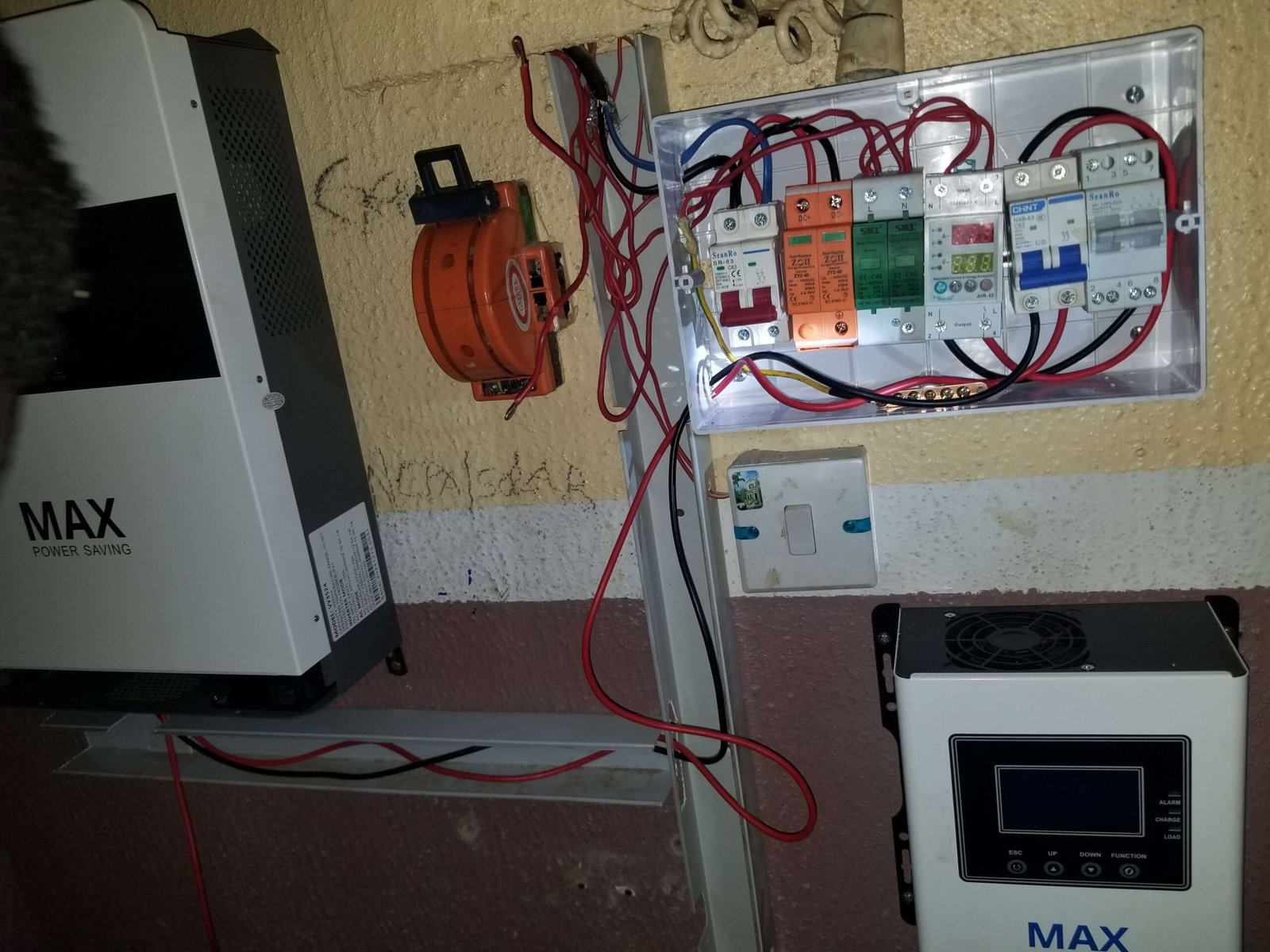
A solar inverter is one of the most important components in a solar power system. When it develops a fault, the effect can be immediate. Appliances may stop working, batteries may fail to charge, solar panels may stop supplying power, or the inverter may repeatedly shut down.
For homeowners and businesses that depend on solar power, an inverter problem can become more than a technical inconvenience. It can interrupt work, affect refrigeration and security systems, disrupt internet access and force the property to rely on generator or grid electricity again.
This is why solar inverter repair and maintenance in Nigeria is an important part of keeping a solar power system reliable.
Not every inverter problem means that the inverter itself has failed. Sometimes the cause is a battery issue, incorrect configuration, overloaded circuits, poor connections, inadequate solar generation or another component of the system.
A proper diagnosis should therefore be carried out before replacing expensive equipment.
At PA DigiTech Solar, we provide solar inverter troubleshooting, repair, maintenance and system support for homes and businesses. If your inverter is showing an error, shutting down, failing to charge or not supplying power as expected, call 07068853073 for assistance.
What Is Solar Inverter Repair?
Solar inverter repair involves identifying and correcting faults affecting an inverter or the wider solar power system.
Depending on the problem, this may involve inspecting the inverter, checking battery voltage, examining solar input, testing electrical connections, reviewing error codes, checking protection devices or investigating the connected loads.
Some faults can be resolved through configuration or replacement of a defective external component. Other problems may require internal inverter repair by a qualified technician or referral to an authorised repair facility, depending on the equipment.
The first step should always be proper diagnosis.
Replacing an inverter without finding out why it stopped working can result in unnecessary expense and may not solve the underlying problem.
Why Solar Inverter Maintenance Matters
Solar power systems are expected to operate for years, often under demanding environmental conditions.
Dust, heat, electrical fluctuations, battery ageing, loose connections and changes in household or business loads can affect system performance over time.
Regular maintenance provides an opportunity to identify potential problems before they become major failures.
It can also reveal changes in the way the system is being used.
For example, a household may have added an air conditioner, freezer or water pump since the solar system was installed. The original system may therefore be operating under a considerably higher load than it was designed for.
Maintenance is an opportunity to reassess the system rather than simply waiting for a complete failure.
Common Solar Inverter Problems
Solar inverters can develop different types of faults.
Some are related to the inverter itself, while others originate from the battery, solar panels, wiring or connected appliances.
Common complaints include:
- Inverter not turning on
- Inverter shutting down unexpectedly
- Battery not charging
- Solar panels not charging the battery
- Inverter showing an error code
- Inverter beeping repeatedly
- Low battery warnings
- Overload warnings
- High-temperature warnings
- No output to appliances
- Short backup time
- Inverter switching between power sources unexpectedly
- Solar input showing little or no power
The same symptom can have several possible causes.
For example, an inverter that switches off may be experiencing low battery voltage, overload, excessive temperature or another protection condition.
This is why troubleshooting should be based on measurements and system information rather than guesswork.
Solar Inverter Not Turning On
If your inverter does not power on, the first thing to investigate is whether the inverter is receiving the required battery or DC input.
A discharged battery, disconnected battery, blown protection device or faulty connection can prevent an inverter from starting.
The inverter’s own power switch and protection devices should also be checked.
If the required input is present but the inverter remains completely unresponsive, the inverter itself may require further diagnosis.
Internal inverter components should not be opened or tested by an unqualified person because of the electrical energy stored within the system.
Solar Inverter Keeps Shutting Down
An inverter that repeatedly shuts down may be responding to a protection condition.
Possible causes can include:
Low battery voltage: The battery has reached a voltage level at which the inverter stops operating to protect the battery.
Overload: The connected appliances are demanding more power than the inverter can safely provide.
Overheating: High ambient temperatures, poor ventilation, excessive load or a problem with the inverter’s cooling system can cause thermal protection.
Battery fault: A deteriorated or defective battery can cause abnormal voltage behaviour.
Electrical fault: Problems with wiring, connections or protection devices can also affect inverter operation.
The inverter’s display, error code and electrical measurements can help determine the cause.
Inverter Showing an Error Code
Modern solar inverters often display error messages or numerical fault codes when they detect an abnormal condition.
The meaning of the code depends on the particular inverter manufacturer and model.
An error code should therefore be interpreted using the manufacturer’s documentation rather than assuming that the same code means the same thing on every inverter.
A technician can use the code together with measurements and system inspection to determine the likely cause.
Simply clearing the error without addressing the underlying issue may result in the problem returning.
Solar Inverter Beeping
Repeated beeping can be an indication that the inverter has detected a warning or fault.
The cause may be low battery voltage, overload, abnormal temperature, charging problems or another system condition.
Some inverter models also use different beep patterns to indicate different states.
The display should be checked alongside the audible warning.
If the inverter continues to beep after the normal operating condition has been restored, the system should be inspected.
Solar Inverter Not Charging the Battery
A battery that is not charging can be caused by several different problems.
The solar panels may not be producing sufficient voltage or power. There could be a problem with the solar input, charge controller, wiring or protection equipment.
The battery itself may also be the cause.
If the inverter is configured incorrectly, it may also fail to charge the battery according to the required charging profile.
For lithium batteries, compatibility between the battery management system and inverter can be particularly important.
For tubular and other lead-acid batteries, charging voltage and charging settings also need to be appropriate for the battery type.
Solar Panels Not Charging the Battery
If the battery is not receiving solar energy, the solar input should be checked.
The technician may need to inspect the solar array, DC isolator, protection devices, cables and connections, as well as the inverter’s solar input readings.
Shading, damaged panels or changes in the panel configuration can also reduce solar generation.
A system that previously charged correctly but has suddenly stopped charging should be investigated rather than assuming that the panels have simply “finished”.
Inverter Overload Problems
An overload occurs when the electrical demand connected to the inverter exceeds its permitted output.
This can happen when too many appliances are operating simultaneously.
It can also happen when an appliance with a high starting current, such as an air conditioner, refrigerator, freezer or water pump, starts up.
If a homeowner has gradually added more appliances to the property, the original inverter may no longer be adequate for the current load.
Repeated overloads should not simply be ignored.
The system should be assessed to determine whether loads need to be managed or whether additional inverter capacity is required.
Inverter Overheating
Nigeria’s climate means that temperature should be taken seriously when installing and maintaining electrical equipment.
An inverter installed in a poorly ventilated location may struggle to dissipate heat, particularly when operating under a heavy load.
Dust accumulation and blocked ventilation can also affect cooling.
If an inverter frequently reports high-temperature warnings or shuts down during periods of heavy use, the installation environment should be inspected.
The inverter should be installed according to the manufacturer’s requirements, including appropriate clearance and environmental conditions.
Battery Problems That Look Like Inverter Problems
One of the most important aspects of solar inverter troubleshooting is understanding that the inverter may not actually be the source of the fault.
A weak or ageing battery can cause low-voltage warnings, short backup times and unexpected shutdowns.
For example, an inverter may appear to work normally when the battery is fully charged but shut down quickly once a load is applied.
This could indicate a battery problem rather than an inverter fault.
Battery voltage alone may not tell the entire story. The battery’s behaviour under load and during charging may also need to be assessed.
Short Solar Backup Time
If your solar system used to provide several hours of backup but now lasts for a much shorter period, several causes are possible.
The battery may have lost capacity.
The household may be using more electricity than before.
An additional appliance may have been connected to the backup circuit.
The battery may not be reaching a full charge.
The inverter settings may also have changed.
A proper assessment should compare the current system performance with its original design.
Solar Inverter Maintenance Checklist
A professional maintenance visit can include inspection of the inverter, battery bank, solar input and electrical connections.
The exact checks depend on the system, but a technician may examine:
- Inverter operating status
- Error and warning history
- Battery voltage and condition
- Solar input voltage and current
- Electrical connections
- Cable condition
- Protection devices
- Ventilation
- System temperature
- Load levels
- Battery charging behaviour
- General system performance
The objective is not simply to clean the equipment. It is to determine whether the system is operating within appropriate conditions.
Solar Inverter Servicing
Servicing is useful when an inverter or solar power system requires more detailed attention than routine inspection.
This may involve diagnosing a recurring fault, checking system configuration, investigating poor performance or addressing problems identified during maintenance.
Where internal inverter repair is required, the appropriate approach depends on the inverter model, warranty status, fault and availability of qualified repair support.
Some inverter faults are not economical or technically appropriate to repair at component level, while others may be serviceable.
A proper diagnosis helps determine the appropriate next step.
Can Every Solar Inverter Be Repaired?
No.
The possibility of repair depends on the type of inverter, age, fault, availability of replacement components and the manufacturer’s repair arrangements.
Some faults may involve replaceable components.
Others may involve major electronic components or circuit boards that make repair uneconomical compared with replacement.
If an inverter is still under warranty, unauthorised repair may also affect the warranty.
The correct approach is to diagnose the equipment first and determine whether repair, replacement or manufacturer support is appropriate.
Solar Inverter Repair vs Inverter Replacement
Replacing an inverter immediately is not always necessary.
If the problem is caused by an external component, incorrect settings, battery failure, overload or wiring issue, replacing the inverter will not solve the real problem.
On the other hand, if the inverter has suffered a major internal failure and repair is not economical, replacement may be the sensible option.
A technician should therefore establish the cause before recommending replacement.
Maintaining Different Types of Solar Inverters
Different inverter technologies require different maintenance considerations.
Hybrid Inverters
Hybrid inverters manage multiple energy sources such as solar, batteries and grid electricity.
Maintenance can involve checking solar input, battery operation, grid integration, system settings and load behaviour.
Because hybrid systems perform several functions, troubleshooting often requires looking at the complete system rather than the inverter in isolation.
Off-Grid Inverters
Off-grid systems depend heavily on battery storage because there may be no grid supply available.
Battery condition and charging performance are therefore particularly important.
If the battery bank is not performing correctly, the inverter may appear to have a problem even when the inverter itself is functioning normally.
Grid-Tied Inverters
Grid-tied systems operate differently because they are designed to work with the electricity grid.
Faults may involve grid voltage, frequency, protection settings or other grid-related conditions.
The system should be assessed according to the inverter manufacturer’s requirements and the applicable electrical installation requirements.
Solar Inverter Maintenance for Homes
Residential inverter maintenance should take into account the actual household load.
If the family has added new appliances since the system was installed, the inverter may now be operating closer to its maximum capacity.
A maintenance visit can therefore be useful for checking whether the existing system is still appropriate.
The battery should also be assessed because battery performance has a major effect on backup duration.
Solar Inverter Maintenance for Businesses
Businesses may have even more reason to maintain their inverter systems because electricity interruptions can directly affect operations.
An office may depend on the system for computers and internet equipment.
A shop may rely on solar power for refrigeration and lighting.
A hotel, clinic or industrial facility may have more complex requirements.
Commercial solar inverter maintenance should therefore consider the importance of the connected loads and the consequences of system downtime.
Solar Inverter Maintenance for Lithium Battery Systems
Lithium battery systems often require attention to communication and battery management.
The inverter and battery need to be compatible and correctly configured.
A technician may need to check battery status, communication, charging settings and any protection events recorded by the battery management system.
The exact procedure depends on the battery and inverter models.
Solar Inverter Maintenance for Tubular Battery Systems
Tubular battery systems have different maintenance requirements.
Battery condition, terminal connections, charging behaviour and other relevant parameters should be monitored.
For battery types that require electrolyte maintenance, the manufacturer’s instructions should be followed.
Poor battery maintenance can eventually affect the inverter because the inverter depends on a healthy battery bank for stable operation.
How Often Should a Solar Inverter Be Serviced?
There is no single servicing interval that applies to every solar installation.
The appropriate frequency depends on the equipment, operating environment, system size, battery technology, workload and manufacturer’s recommendations.
A heavily used commercial solar system may require more frequent inspection than a small residential system.
Properties in dusty environments or locations with challenging operating conditions may also benefit from more regular checks.
The important point is to avoid waiting for a complete system failure before paying attention to maintenance.
Solar Inverter Maintenance in Nigeria’s Climate
Heat and dust are two environmental factors worth considering.
An inverter operating in a hot, poorly ventilated area may experience more thermal stress than one installed in an appropriate location.
Dust can also accumulate around ventilation areas and other equipment.
The installation location should therefore be kept suitable for the inverter’s operating requirements.
However, cleaning and maintenance should be performed safely. Electrical equipment should not simply be exposed to water or inappropriate cleaning methods.
How Much Does Solar Inverter Repair Cost in Nigeria?
There is no fixed price for solar inverter repair.
The cost depends on the type of inverter, nature of the fault, required parts, diagnostic work and whether the issue is actually with the inverter.
A minor configuration or external wiring issue can be very different in cost from a major internal electronic failure.
For this reason, a technician should inspect the system before providing a repair quotation.
The same principle applies to inverter servicing. The cost can depend on the size and complexity of the installation and the work required.
When Should You Call a Solar Technician?
You should consider professional assistance when your inverter repeatedly shuts down, displays persistent error codes, fails to charge the battery, stops producing solar power, shows unusual readings or cannot supply the expected loads.
Professional support is also useful when installing a replacement battery or inverter.
Trying random settings or repeatedly switching protection devices on and off may make diagnosis more difficult and could create additional problems.
Do Not Ignore Repeated Inverter Warnings
An occasional warning may be caused by a temporary operating condition.
However, repeated alarms or shutdowns should not be ignored.
If an inverter consistently reports overload, overheating, low battery or another fault, the underlying cause should be investigated.
Continuing to operate equipment outside its intended conditions can potentially shorten the service life of the system.
Upgrading an Existing Solar Inverter System
Sometimes the problem with an existing system is not a fault at all. The system may simply no longer meet the customer’s needs.
For example, a homeowner may have installed a small inverter several years ago and subsequently added more appliances.
The solution could involve upgrading the inverter, increasing battery capacity, adding solar panels or redesigning the backup circuits.
An assessment can determine whether an upgrade is more appropriate than repeated repairs.
Why Professional Solar Inverter Repair Matters
Solar inverter systems combine electrical, electronic and energy-storage components.
A proper diagnosis requires an understanding of how these components interact.
For example, a low battery voltage could result from an ageing battery, inadequate charging, excessive load, poor connections or an inverter configuration issue.
Simply replacing one component without identifying the cause can result in wasted money and recurring problems.
Professional troubleshooting helps identify the actual source of the issue before repair or replacement is recommended.
Why Choose PA DigiTech Solar?
At PA DigiTech Solar, we provide support for homeowners and businesses experiencing solar inverter and backup system problems.
Our services can include solar inverter troubleshooting, inverter maintenance, battery checks, system inspections, inverter servicing, battery replacement support and solar system performance assessment.
If your inverter is not charging, repeatedly shutting down, displaying an error, providing insufficient backup or failing to operate as expected, we can assess the system and determine the appropriate next step.
Where an inverter requires a specific manufacturer-level repair or replacement component, the system can be assessed accordingly rather than replacing equipment unnecessarily.
For solar inverter repair and maintenance in Nigeria, contact PA DigiTech Solar on 07068853073.
Frequently Asked Questions About Solar Inverter Repair and Maintenance
Why is my solar inverter not working?
Several problems can cause an inverter to stop working, including low battery voltage, overload, faulty connections, protection trips, overheating, solar input problems or an internal inverter fault.
Why does my inverter turn off when I connect appliances?
The inverter may be overloaded, or one of the appliances may have a high starting current. The battery may also be unable to maintain the required voltage under load.
Why is my inverter not charging my battery?
Possible causes include inadequate solar input, incorrect charging settings, battery problems, faulty wiring, protection devices or an inverter charging fault.
How do I know if my solar battery is bad?
A battery that provides significantly less backup than before, drops voltage rapidly under load or fails to charge properly may require testing. However, these symptoms can also have other causes, so proper diagnosis is important.
Can a faulty battery damage an inverter?
Battery problems can affect inverter operation, particularly where abnormal voltage conditions or unsuitable charging behaviour occur. The battery and inverter should be assessed together when diagnosing system problems.
Can a solar inverter be repaired?
Some inverter faults can be repaired, while others may require replacement. The decision depends on the inverter model, fault, parts availability, repair cost and warranty considerations.
How often should I maintain my solar inverter?
The appropriate maintenance schedule depends on the equipment, system size, operating environment and manufacturer’s recommendations. Regular inspection is preferable to waiting until the system fails.
Why does my inverter overheat?
Possible causes include high ambient temperature, excessive load, inadequate ventilation, blocked cooling areas, dust or an equipment fault.
Can I repair my solar inverter myself?
Electrical and electronic inverter repairs should be handled by appropriately trained personnel. Attempting internal repairs without the required expertise can create safety risks and damage the equipment.
Should I repair or replace my old inverter?
It depends on the fault, age, condition, availability of parts, repair cost and whether the inverter still meets your electricity requirements. A proper assessment can help determine the most appropriate option.
Get Solar Inverter Repair and Maintenance Support
A solar inverter problem should not automatically mean that the entire solar system needs to be replaced.
The inverter, batteries, solar panels, wiring, protection equipment and connected loads all work together. A fault in one part can sometimes appear to be a problem with another.
Proper troubleshooting can identify the actual cause and help prevent unnecessary replacement costs.
Whether your solar inverter is not charging, keeps shutting down, shows an error code, overheats, trips on overload or provides less backup than expected, professional assessment can help restore the system to reliable operation.
PA DigiTech Solar provides solar inverter repair, maintenance and system support for residential and commercial customers in Nigeria.
For enquiries, troubleshooting assistance or to arrange a solar system inspection, call 07068853073.