
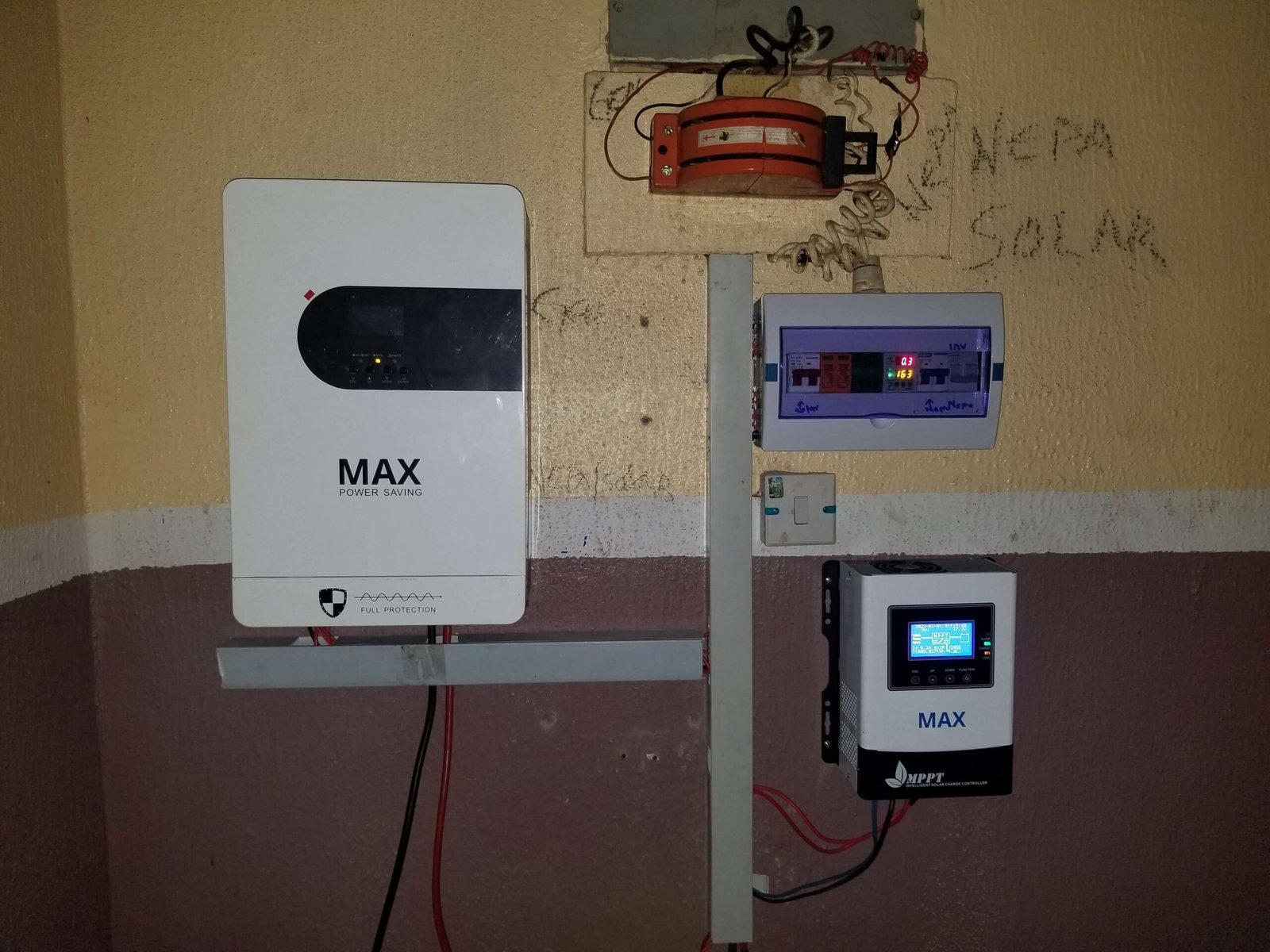
A 2kVA solar system is a practical option for households, small offices and businesses that need more capacity than a basic 1kVA system but do not necessarily require a large 5kVA or 10kVA installation. With the right combination of inverter, batteries and solar panels, a 2kVA system can provide reliable backup power for essential household appliances and reduce dependence on generators and the public electricity supply.
However, choosing a 2kVA system should not be based on the inverter rating alone. A solar installation consists of several interconnected components, and each component has a different job. The inverter determines how much electrical power the system can supply at a given time, the battery determines how much energy can be stored for use when there is insufficient solar generation, and the solar panels determine how much energy can be generated during the day to power appliances and recharge the batteries.
This is why two systems that are both advertised as “2kVA solar systems” can have very different prices, battery backup times and capabilities. One may use two 200Ah tubular batteries and a modest solar array, while another may use lithium storage and a larger solar array. Both may have a 2kVA inverter, but they will not deliver the same overall experience.
If you are considering a 2kVA solar installation in Nigeria, this guide explains the likely cost, components, battery options, solar panel requirements, appliances the system can realistically power, expected backup time and the factors you should consider before purchasing or installing one.
How Much Does a 2kVA Solar System Cost in Nigeria in 2026?
The cost of a 2kVA solar system in Nigeria depends heavily on what is included in the package. Current 2026 Nigerian market sources show complete 2kVA systems ranging from roughly ₦1 million to ₦2.4 million, although individual packages can fall outside this range depending on their specification. One current market guide gives ₦1,000,000 to ₦2,400,000 for 2kVA to 2.5kVA complete systems, while another current listing gives a 2kVA solar package with installation at approximately ₦962,850 to ₦1,140,000.
Actual quotations can differ significantly because a 2kVA system can be built around different battery technologies, solar-panel capacities and inverter specifications. For example, a current Nigerian 2kVA package listed by Cloud Energy uses a 24V inverter, two 12V 200Ah tubular batteries and a solar array, while another supplier lists a 2kVA system with two 220Ah tubular batteries and four 400W solar panels for about ₦1.8 million, including installation and logistics.
A practical way to budget for a 2kVA installation in 2026 is therefore:
| 2kVA System Type | Indicative 2026 Budget |
|---|---|
| Basic inverter and battery backup | ₦500,000 – ₦900,000 |
| Standard 2kVA solar system | ₦1,000,000 – ₦1,700,000 |
| 2kVA system with larger tubular battery bank | ₦1,400,000 – ₦1,900,000 |
| 2kVA system with lithium battery | ₦1,800,000 – ₦2,500,000+ |
These figures are indicative market ranges rather than fixed prices. The exact cost should be based on the equipment selected, the required battery capacity, solar-panel capacity, protection equipment, installation materials and site conditions.
What Does a 2kVA Solar System Mean?
A 2kVA solar system normally refers to a solar installation built around an inverter rated at approximately 2kVA. Depending on the inverter model and power factor, the actual continuous wattage available may be lower than 2,000W, so the manufacturer’s specifications should always be checked before deciding what appliances the system can operate.
For practical purposes, many 2kVA systems are designed for essential household loads such as lighting, fans, television, internet equipment, computers and refrigeration, provided the combined load and starting requirements remain within the inverter’s capabilities.
The important thing to understand is that 2kVA describes the inverter’s power capacity, not the amount of energy stored in the batteries. A 2kVA inverter with a small battery bank can run a reasonable load for a short period, while the same inverter connected to a larger battery bank can provide considerably longer backup.
The Main Components of a 2kVA Solar System
A properly installed 2kVA solar system normally consists of more than an inverter and a battery. Depending on the system design, it can include a 2kVA inverter, batteries, solar panels, mounting structures, solar cables, battery cables, breakers, fuses, isolators, surge protection, earthing and other electrical accessories.
The quality and specification of these supporting components can affect both the performance and safety of the system. This is why a quotation that simply says “2kVA solar system” without identifying the inverter model, battery capacity and panel wattage does not provide enough information for a meaningful comparison.
1. 2kVA Solar Inverter
The inverter is the central component that converts DC electricity from the batteries and solar system into AC electricity that household appliances can use. In a hybrid system, it can also coordinate power from solar panels, batteries and the public electricity supply.
When selecting a 2kVA inverter, it is important to look beyond the 2kVA label. The continuous output in watts, surge capacity, battery voltage, maximum solar input, MPPT range, charging current and compatibility with the selected battery should all be considered.
A good inverter should also have appropriate protection against conditions such as overload, short circuit, excessive temperature and abnormal battery voltage. If lithium batteries are being used, communication between the inverter and battery management system may also need to be considered.
2. Battery Bank
The battery is one of the most important components of a 2kVA solar system because it determines how much stored energy is available when the solar panels are not producing enough electricity.
A common configuration for a 2kVA, 24V system is two 12V batteries connected in series. For example, two 12V 200Ah batteries provide a 24V, 200Ah battery bank. The nominal stored energy is approximately:
24V × 200Ah = 4,800Wh
That is approximately 4.8kWh of nominal battery capacity.
However, you should not assume that all 4.8kWh will be available for regular use. The usable amount depends on the battery chemistry, recommended depth of discharge, battery condition and system losses.
Current Nigerian 2kVA packages demonstrate this type of configuration. Cloud Energy, for example, currently lists a 2kVA/24V package using two 12V 200Ah tubular batteries. Another Nigerian supplier lists a 2kVA system using two 220Ah tubular batteries.
Tubular or Lithium Battery for a 2kVA System?
Battery choice can make a major difference to the total price of a 2kVA solar installation.
Tubular batteries generally provide a lower initial cost and remain a common option for residential inverter systems. A properly selected tubular battery bank can provide useful backup for lighting, fans, television, refrigeration and other essential loads.
Lithium batteries, particularly LiFePO4 batteries, normally cost more initially but offer advantages such as deeper usable capacity, lower maintenance and a high number of charge and discharge cycles when properly operated.
For a household that uses the solar system frequently every day, lithium may be worth considering because the initial purchase price is only part of the long-term cost. For a household mainly interested in affordable backup during occasional outages, a properly sized tubular system may be a more appropriate starting point.
The correct decision depends on the budget, expected usage, backup requirements and long-term plans for the system.
3. Solar Panels
The solar panels are responsible for generating electricity during daylight hours. They can supply the daytime loads while also providing energy for charging the battery, depending on the system configuration and available solar generation.
There is no single panel configuration that applies to every 2kVA inverter. Current Nigerian packages show different approaches. One current 2kVA system uses four 400W monocrystalline panels, providing a 1.6kW solar array, while another uses four 410W panels for approximately 1.64kW of solar capacity.
The number of panels should therefore be determined by the inverter’s maximum PV input, MPPT voltage range, the required daily energy production and the battery charging requirements.
4. Mounting Structure
Solar panels need to be securely mounted on a suitable roof or ground structure. The installation should take account of the roof condition, panel arrangement, shading and the physical environment.
The mounting structure should be strong enough to support the panels and withstand the environmental conditions at the installation location. The installer should also ensure that the panel arrangement does not unnecessarily expose the system to shading from trees, nearby buildings, water tanks or other structures.
5. Cables and Protection Equipment
A professional 2kVA installation should include appropriately sized cables and suitable electrical protection. The system may require solar DC cables, battery cables, AC cables, breakers, fuses, isolators, surge protection and earthing.
The correct cable size is particularly important between the battery and inverter because relatively high currents can flow through the battery connection. Long cable runs may also require additional consideration to limit voltage drop.
Protection equipment should be selected according to the actual system design rather than added simply as generic accessories.
How Many Solar Panels Do You Need for a 2kVA System?
The answer depends on the inverter and the energy requirements of the property.
For example, four 400W panels provide:
4 × 400W = 1,600W
Four 410W panels provide:
4 × 410W = 1,640W
Four 450W panels provide:
4 × 450W = 1,800W
These are all plausible solar-array configurations for a 2kVA-class installation, but whether a particular configuration is suitable depends on the inverter’s PV input limits and voltage range.
The panels should not simply be selected because their combined wattage sounds appropriate. Their voltage and current specifications must also be compatible with the inverter’s MPPT.
What Appliances Can a 2kVA Solar System Power?
A properly designed 2kVA system can handle substantially more than a basic 1kVA system, but it is still important to manage the total load.
The actual appliances that can be powered depend on their individual wattages, starting requirements and how many are operating simultaneously.
A typical 2kVA system may be suitable for combinations of:
LED lighting, fans, television, decoder, Wi-Fi router, laptops, phone charging, refrigerator and selected small appliances.
Some current Nigerian 2kVA packages are specifically advertised for loads including two to three energy-efficient fans, a television, lights, a medium-sized refrigerator and phone or laptop charging.
Other packages are designed around lighting, television, several fans, sound systems and electronic devices.
These examples should not be interpreted as a universal appliance list. The actual power requirements of your appliances need to be assessed before installation.
Example: Appliances a 2kVA System Could Run
Consider a household with the following approximate loads:
| Appliance | Example Load |
|---|---|
| 6 LED bulbs | 60W |
| 3 energy-efficient fans | 165W |
| Television | 100W |
| Decoder | 20W |
| Wi-Fi router | 15W |
| Laptop | 65W |
| Refrigerator | 150W |
| Phone charging | 20W |
| Estimated running load | 595W |
These are illustrative figures rather than measurements for every appliance.
At an average running load of approximately 595W, a 2kVA inverter has considerable capacity remaining for normal variations in appliance consumption.
This is a much more realistic way to use the system than deliberately pushing the inverter close to its maximum rating throughout the day.
Can a 2kVA Solar System Run a Refrigerator?
Yes, a 2kVA system can be suitable for a refrigerator, provided the inverter and battery are correctly selected.
However, refrigerators use compressors, and the compressor can have a higher starting demand than its normal running consumption. The inverter therefore needs sufficient surge capacity.
The refrigerator should also be considered alongside the other appliances that will be running at the same time. A 2kVA inverter may comfortably handle a refrigerator together with lighting, fans and television, but adding several other high-power appliances could change the situation.
This is why appliance combinations are more useful than simply asking whether a particular appliance is “compatible with 2kVA”.
Can a 2kVA Solar System Power a Freezer?
A freezer can potentially be powered by a 2kVA system, but the same considerations that apply to refrigerators apply here.
The freezer’s running consumption, compressor starting requirement and the other connected loads need to be considered.
If the freezer is particularly large or energy-intensive, or if the homeowner wants it to operate continuously throughout a long outage, additional battery capacity may be required even if the inverter itself is large enough.
Remember that the inverter determines the power available at one time, while the battery determines how long that energy can be supplied.
Can a 2kVA System Power an Air Conditioner?
This depends on the air conditioner, but a conventional 2kVA system should not automatically be assumed to be suitable for running a typical household air conditioner.
Air conditioners can have substantial power requirements, and starting or compressor behaviour can place additional demands on an inverter.
Some highly efficient inverter air conditioners may have lower operating consumption than conventional units, but the exact specifications still need to be checked.
If air conditioning is a major requirement, it is usually better to calculate the complete load before choosing the inverter rather than purchasing a 2kVA system first and hoping it will handle the appliance.
Can a 2kVA Solar System Run a Washing Machine?
A washing machine may be possible in some situations, but it depends on its power rating and what else is operating.
The machine’s motor can create a starting demand, and some washing machines can consume considerably more power during particular parts of their cycle.
If a washing machine is an important load, the inverter’s continuous output and surge capacity should be checked against the manufacturer’s specifications.
It may also be more practical to operate the washing machine during periods of strong solar generation rather than relying heavily on the battery.
Can a 2kVA System Power an Electric Iron?
An electric iron can be a challenging load for a small inverter because many irons have relatively high power ratings.
A 2kVA inverter may be capable of handling a particular iron depending on its actual wattage and the other loads running at the time, but it should not be assumed that every iron can be used safely alongside a refrigerator, television, fans and other appliances.
High-power heating appliances are often better treated as controlled or daytime loads where the solar array can contribute directly to their operation.
How Long Can a 2kVA Solar System Provide Backup?
Backup time depends primarily on the battery bank and the average load.
Consider a 24V 200Ah battery bank.
Its nominal energy is:
24V × 200Ah = 4.8kWh
If the average household load is approximately 500W, a simple theoretical calculation would be:
4,800Wh ÷ 500W = 9.6 hours
However, this does not mean the system will necessarily provide 9.6 hours of real-world backup.
In practice, inverter losses, battery operating limits, battery condition and changes in appliance consumption reduce the usable runtime.
A tubular battery bank may also need to be operated at a more conservative depth of discharge than a lithium system.
For example, if only approximately 50% of the nominal capacity of a lead-acid battery bank is treated as regularly usable, the practical energy available would be significantly lower.
This is why installers should quote backup expectations based on usable battery energy and the expected load, rather than simply saying “two 200Ah batteries will last X hours”.
Why the Battery Matters More Than the 2kVA Rating for Backup Time
The 2kVA inverter tells you approximately how much power can be delivered at one time. It does not tell you how long that power will last.
Imagine two properties with identical 2kVA inverters.
Property A has a relatively small battery bank.
Property B has a larger lithium battery bank.
If both properties are running the same 500W load, Property B may have considerably longer backup because it has more stored energy available.
This is why customers should avoid choosing a solar system purely by inverter size.
2kVA Solar System for a Two-Bedroom House
A 2kVA system can be a reasonable option for a two-bedroom home where the homeowner prioritises essential appliances.
A suitable system may support lighting, fans, television, internet equipment, refrigeration and other modest loads.
The system may also provide useful daytime solar power, depending on the panel capacity and sunlight conditions.
However, if the property contains several air conditioners, electric cooking equipment, water heaters, large freezers and other heavy appliances, a larger inverter and battery system may be required.
The number of bedrooms is therefore not enough information to determine the correct solar capacity.
2kVA Solar System for a Three-Bedroom House
A 2kVA system can also work for a three-bedroom house if the objective is to provide backup for selected essential loads rather than power every appliance in the building.
For example, the system might be connected to lighting, fans, television, internet equipment, refrigeration and selected sockets.
If the homeowner wants to run multiple air conditioners, pumps, electric cookers and other heavy appliances during outages, 2kVA may not provide enough capacity.
A load assessment should therefore be carried out before making the final decision.
2kVA Solar System for a Small Office
Small offices can benefit from a 2kVA system because many essential office loads are relatively moderate.
Computers, monitors, networking equipment, lighting and phone charging can often be incorporated into a properly sized system.
However, printers, photocopiers, air conditioners, kettles and other high-power equipment can change the load considerably.
For a business, it is also useful to identify which equipment absolutely needs to remain operational during an outage. This allows the installer to design an essential-load system rather than unnecessarily sizing the system around equipment that can be switched off.
2kVA Solar System for a Small Business
A 2kVA system can be useful for businesses such as small shops, offices, salons and other operations with moderate electrical requirements.
For example, a business may primarily require lighting, fans, POS equipment, computers, television or refrigeration.
However, businesses that rely on multiple freezers, commercial refrigeration, air conditioners, pumps or other heavy equipment may require a larger system.
The system should therefore be designed around the business’s actual load profile and operating hours.
How Much Solar Energy Can a 2kVA System Produce?
The inverter rating does not tell you how much energy the solar panels will generate.
Suppose a system has approximately 1.6kW of solar panels. The theoretical maximum output at a particular instant under ideal conditions could approach 1.6kW, but actual production varies throughout the day.
Cloud cover, shading, panel temperature, panel orientation, dust, wiring losses and other factors can reduce production.
This means that a 1.6kW solar array should not be interpreted as producing 1.6kWh every hour from sunrise to sunset.
A properly designed system should instead be assessed according to expected daily energy generation and the property’s daily energy requirements.
Why Solar Panel Size Matters
A common mistake is to install a large battery bank without providing enough solar generation to recharge it effectively.
For example, if you install substantial battery storage but only have a relatively small solar array, the battery may take longer to recharge, particularly after a prolonged outage.
Conversely, installing more solar capacity can allow the system to recharge the batteries more effectively while also supporting daytime loads.
The inverter’s maximum PV input must, however, be respected. You cannot simply keep adding panels without checking the inverter’s voltage and current limits.
What Determines the Cost of a 2kVA Solar System?
The inverter is only one part of the total cost.
Battery capacity is one of the biggest variables. A system using two 200Ah tubular batteries will have a very different cost from one using a large lithium battery.
Solar-panel capacity is another major factor. Four 400W panels, for example, provide 1.6kW of installed panel capacity, while four 550W panels provide 2.2kW.
Other factors include the inverter brand, battery brand, mounting structure, protection equipment, cable length, installation complexity, transportation and whether electrical modifications are required.
This is why a professional quotation should always show the equipment specification rather than simply giving one total figure.
What Should Be Included in a 2kVA Installation Quote?
Before accepting a quotation, ask the installer to specify exactly what is included.
A complete quotation should normally identify the inverter model and capacity, battery type and capacity, number and wattage of solar panels, mounting materials, cables, protection equipment and installation labour.
It should also make clear whether transportation, testing, commissioning and after-sales support are included.
This is particularly important because the word “installation” can mean different things to different installers.
One installer may quote only for mounting the inverter and connecting the batteries. Another may include the complete solar-panel installation, electrical protection, cabling, testing and commissioning.
The two prices cannot be compared fairly without understanding the scope.
Common Mistakes When Buying a 2kVA Solar System
One of the most common mistakes is choosing the system based on the number of bedrooms rather than the actual electrical load. A three-bedroom house can have a relatively modest load, while a small apartment can contain several high-power appliances.
Another mistake is focusing only on inverter capacity while ignoring battery storage. A 2kVA inverter may be capable of supplying the required load, but the battery may not contain enough energy to provide the desired backup time.
Some buyers also choose batteries based purely on Ah ratings without considering voltage. A 12V 200Ah battery contains a different amount of energy from a 24V 200Ah battery, even though both are labelled “200Ah”.
Finally, some buyers concentrate on getting the lowest possible quotation and overlook cable sizing, protection equipment, battery quality and installation workmanship.
A solar system is an electrical installation, not simply a collection of equipment.
Should You Buy a 2kVA Solar System or a Larger System?
A 2kVA system can be a good choice when your priority is essential backup rather than whole-house power.
If your main loads are lighting, fans, television, internet equipment, computers and refrigeration, a properly designed 2kVA system may be sufficient.
If your objective is to run multiple air conditioners, electric cooking appliances, water heaters, pumps and other heavy loads simultaneously, you should consider a larger system after carrying out a proper load assessment.
The right system is not necessarily the largest one you can afford. It is the one that provides the required power and energy for your actual usage without unnecessary expenditure.
Professional 2kVA Solar System Installation in Nigeria
A 2kVA system should be designed around the property rather than simply installed from a standard package.
At PA DigiTech Solar, the process can start with an assessment of the appliances you want to operate, your expected backup duration and whether you need the system to support future expansion. This helps determine whether 2kVA is suitable and what combination of inverter, battery and solar panels should be used.
PA DigiTech Solar provides solar system design, inverter installation, solar panel installation, battery installation and complete solar power system installation for homes and businesses in Nigeria.
Whether you need a basic backup system or a more comprehensive solar installation, the aim is to match the equipment to the actual electrical requirements of the property rather than simply recommending equipment based on its advertised capacity.
For a 2kVA solar system assessment or installation enquiry, contact PA DigiTech Solar on 07068853073.
Final Thoughts
A 2kVA solar system can provide a useful balance between capacity and cost for many homes, small offices and businesses in Nigeria. When properly designed, it can support essential loads such as lighting, fans, television, internet equipment, computers and refrigeration while reducing the need to rely heavily on generators during power interruptions.
The most important thing is to understand that a 2kVA inverter is only one part of the system. The battery determines how much stored energy is available, while the solar panels determine how effectively that energy can be generated and recovered during the day.
In 2026, complete 2kVA systems can vary considerably in price. Current market examples range from around ₦1 million to above ₦2 million depending on the battery, inverter, panel capacity and installation specification.
Before buying, therefore, do not ask only, “How much is a 2kVA solar system?”
Ask:
What appliances do I want to power?
How much power do those appliances consume?
How many hours of backup do I need?
What battery capacity will provide that backup?
How much solar generation is required to recharge the batteries?
Once these questions have been answered, it becomes much easier to select a system that matches your requirements and budget.
If you are considering a 2kVA solar installation for your home, office or business, PA DigiTech Solar can help assess your requirements and recommend a suitable system. Call 07068853073 to discuss your solar installation needs.