
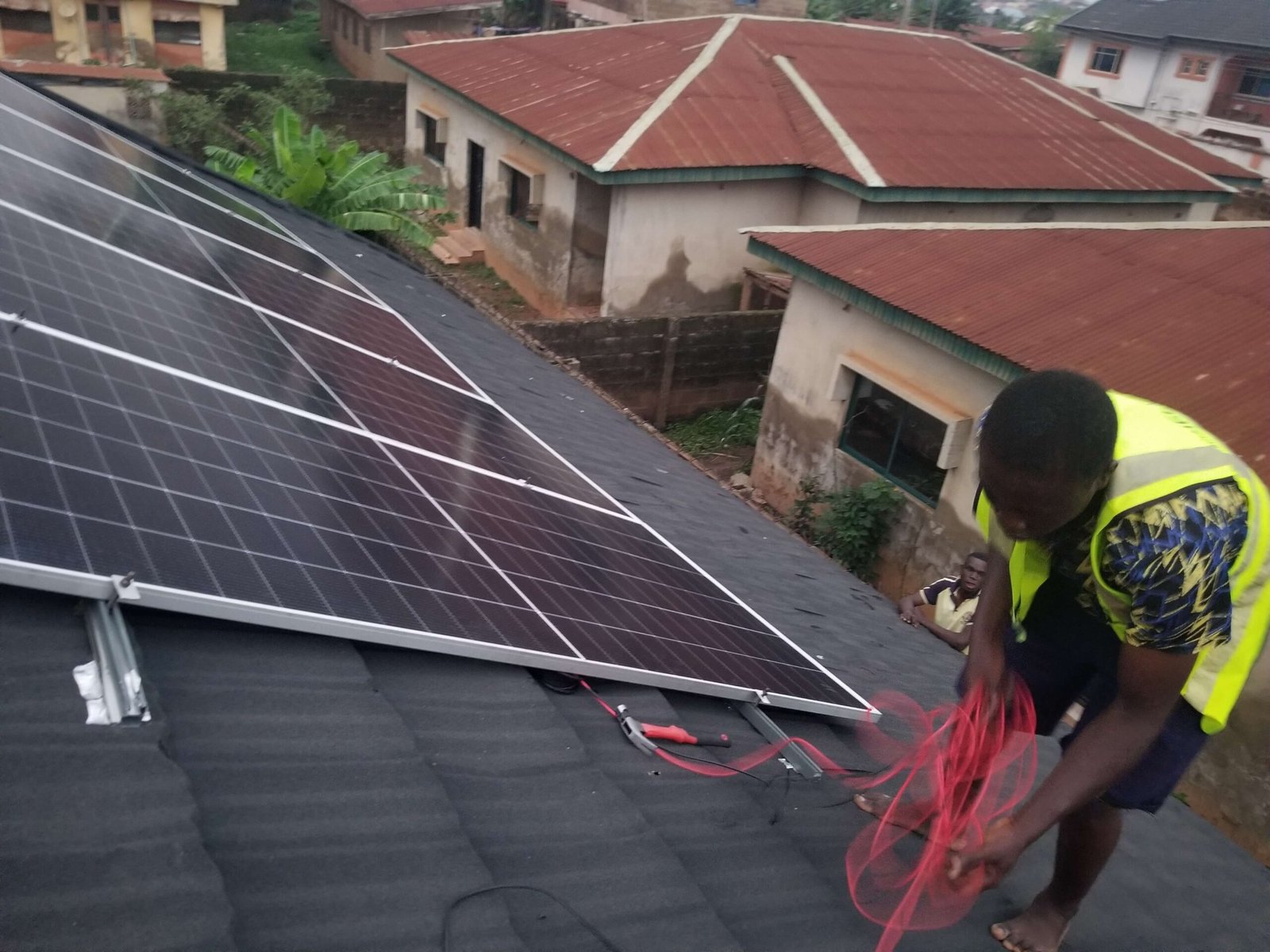
The familiar sound of generators humming across Nigerian neighborhoods has become the soundtrack of our energy crisis. From Lagos to Kano, from Ibadan to Port Harcourt, millions of Nigerians have resigned themselves to the daily ritual of fueling up their “gen” just to keep the lights on.
But times are changing rapidly. With diesel prices hitting ₦1,200 per litre and petrol at average of ₦1,000 per litre, many Nigerians are spending more on fuel than they do on food. Meanwhile, solar systems, despite their higher upfront costs, are proving more economical and environmentally friendly for long-term energy solutions.
If you’re tired of the endless cycle of buying fuel, dealing with generator breakdowns, and enduring sleepless nights due to noise, this comprehensive comparison will help you understand why thousands of Nigerians are making the switch from generators to solar panels – and whether it’s the right choice for you.
The True Cost of Energy Independence: A Real-World Analysis
Before diving into the technical comparisons, let’s establish the harsh reality facing Nigerian households and businesses today. The average Nigerian family spends between ₦150,000 to ₦400,000 annually on generator fuel alone. Small businesses often spend much more, with some reporting monthly fuel expenses exceeding ₦300,000.
Consider this: if you’re spending ₦80,000 monthly on petrol for your generator (quite common for a medium-sized home), you’re spending ₦960,000 annually. Over five years, that’s ₦4.8 million – enough to install a substantial solar system that could serve you for 20+ years.
But the real question isn’t just about money. It’s about quality of life, reliability, and long-term sustainability. Let’s break down every aspect of this crucial decision.
1. Fuel Costs: The Never-Ending Expense vs. Free Energy
Generators: The Fuel Trap
The most obvious difference between generators and solar systems is fuel dependency. Nigerian generator owners are trapped in an escalating cost cycle that shows no signs of slowing down.
Current Fuel Realities:
- Petrol: ₦910 per litre (and rising)
- Diesel: ₦1200 per litre (often higher at filling stations)
Monthly Fuel Costs by Generator Size:
- Small generators (2-3.5kVA): ₦45,000 – ₦85,000 monthly
- Medium generators (5-7.5kVA): ₦85,000 – ₦150,000 monthly
- Large generators (10kVA+): ₦180,000 – ₦400,000+ monthly
These figures assume 6-8 hours of daily operation, which is typical for areas with poor grid supply. During periods of extended power outages (quite common), these costs can double.
The Hidden Fuel Costs:
- Transportation to filling stations: Time and vehicle fuel costs
- Storage containers: Jerry cans, storage tanks
- Fuel degradation: Petrol loses quality over time
- Security concerns: Storing fuel attracts theft
Real-Life Example: Mr. Adebayo from Ikeja, Lagos, operates a 5kVA generator for his family home. He spends approximately ₦120,000 monthly on petrol, totaling ₦1,440,000 annually. Over ten years, this amounts to ₦14.4 million – not including fuel price increases.
Solar Panels: Harnessing Free Energy
Solar panels operate on a fundamentally different economic model. After installation, your primary energy source – sunlight – is completely free.
Nigeria’s Solar Advantage: Nigeria receives an average of 5.5-6.5 hours of peak sunlight daily, even during the harmattan season. This consistent solar irradiance means your solar panels generate substantial electricity year-round.
Long-term Fuel Savings: A ₦3 million solar installation that eliminates ₦120,000 in monthly fuel costs pays for itself in just 25 months. After that, you enjoy essentially free electricity for 20+ years.
Winner: Solar Panels – The mathematics are undeniable. While generators demand constant fuel purchases, solar systems provide decades of free energy.
2. Maintenance: Constant Repairs vs. Minimal Upkeep
Generators: High-Maintenance Machines
Generators are mechanical devices with numerous moving parts, all subject to wear, tear, and frequent failure. Nigerian generator owners know the frustration of unreliable machines breaking down at the worst possible moments.
Regular Maintenance Requirements:
- Oil changes: Every 100-200 hours of operation (₦8,000-₦15,000 monthly)
- Air filter cleaning/replacement: Monthly (₦3,000-₦8,000)
- Spark plug replacement: Every 6 months (₦2,000-₦5,000)
- Fuel filter replacement: Quarterly (₦3,000-₦6,000)
- Carburetor cleaning: Bi-annually (₦5,000-₦15,000)
Common Repair Issues:
- Engine overhaul: ₦150,000 – ₦800,000 (every 3-7 years)
- Alternator replacement: ₦80,000 – ₦200,000
- Control panel repairs: ₦25,000 – ₦100,000
- Cooling system repairs: ₦50,000 – ₺150,000
Annual Maintenance Costs:
- Small generators: ₦80,000 – ₦150,000
- Medium generators: ₦150,000 – ₦300,000
- Large generators: ₦300,000 – ₦800,000
The Technician Challenge: Finding reliable generator technicians in Nigeria is increasingly difficult. Many “engineers” lack proper training, leading to repeated repairs and shortened equipment lifespan.
Solar Panels: Minimal Maintenance
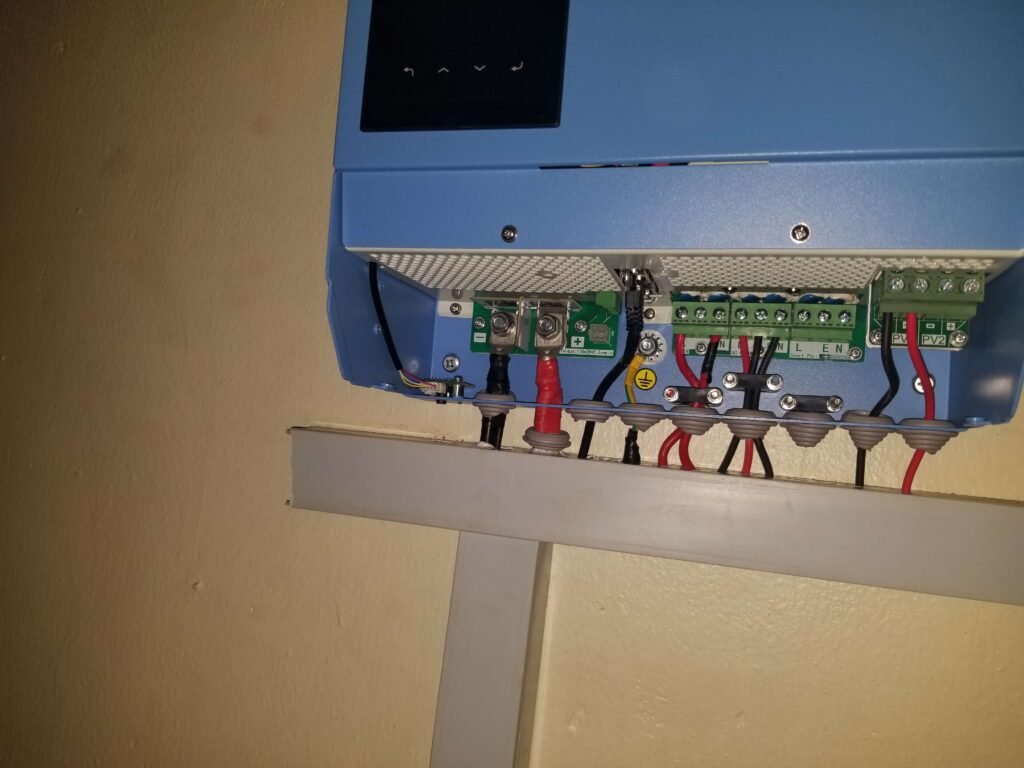
Solar systems have no moving parts in their primary components (panels and inverters), resulting in significantly lower maintenance requirements.
Annual Maintenance Needs:
- Panel cleaning: Monthly dust removal (can be done personally)
- Visual inspection: Checking for physical damage or loose connections
- Battery maintenance: For lead-acid batteries, checking water levels quarterly
- Inverter inspection: Annual professional check-up
Professional Maintenance Costs:
- Annual service: ₦50,000 – ₦100,000
- Battery replacement (Lead-acid): ₦300,000 – ₦800,000 every 4-5 years
- Battery replacement (Lithium): ₦800,000 – ₦2,000,000 every 10-12 years
- Inverter replacement: ₦400,000 – ₦1,200,000 every 10-15 years
Self-Maintenance Benefits: Unlike generators, basic solar system maintenance can be performed by homeowners. Panel cleaning requires only water and a soft brush, while system monitoring can be done through smartphone apps.
Winner: Solar Panels – Lower maintenance frequency, costs, and complexity make solar systems far more convenient for busy Nigerian households and businesses.
3. Noise and Environmental Impact: Disruption vs. Silent Operation
Generators: The Noise Nuisance
Anyone who has lived in Nigeria knows the constant drone of generators throughout neighborhoods. This noise pollution has become such a problem that many residential areas now restrict generator operating hours.
Noise Level Comparison:
- Small petrol generators: 65-75 decibels (equivalent to heavy traffic)
- Medium generators: 75-85 decibels (equivalent to city traffic)
- Large diesel generators: 85-95 decibels (equivalent to a motorcycle)
Health and Social Impacts:
- Sleep disruption: Affecting rest quality and health
- Concentration problems: Impacting work and study
- Neighbor disputes: Leading to community tensions
- Property value impact: Noise pollution reduces property attractiveness
Environmental Consequences:
- Air pollution: Generators emit carbon monoxide, nitrogen oxides, and particulate matter
- Carbon footprint: A 5kVA generator produces approximately 2.3 tons of CO2 annually
- Soil contamination: Oil and fuel spills damage ground environment
- Indoor air quality: Poorly ventilated generator areas create health hazards
Solar Panels: Silent and Clean
Solar panels operate completely silently. The only sound comes from inverter cooling fans, which are barely audible and operate only when needed.
Noise Levels:
- Solar panels: 0 decibels (completely silent)
- Inverter fan: 30-40 decibels (quieter than a whisper)
- Overall system: Virtually silent operation
Environmental Benefits:
- Zero emissions: No harmful gases or pollutants
- Carbon footprint reduction: Eliminates generator-related CO2 emissions
- No soil contamination: No fuel spills or oil leaks
- Improved air quality: Contributes to cleaner neighborhood environment
Quality of Life Improvements: Families who switch to solar consistently report better sleep quality, reduced stress, and improved relationships with neighbors. The silence is particularly appreciated during study time, work-from-home sessions, and evening relaxation.
Winner: Solar Panels – The silence alone makes solar systems superior for residential and office environments.
4. Reliability and Performance: Fuel Dependency vs. Weather Dependency
Generators: Fuel-Dependent Reliability
Generators can provide power on-demand, but their reliability depends entirely on fuel availability and mechanical condition.
Reliability Challenges:
- Fuel scarcity: Common during economic uncertainty
- Fuel quality issues: Bad petrol damages engines frequently
- Mechanical failures: Moving parts break down regularly
- Starting problems: Particularly common in older generators
- Load limitations: Overloading causes frequent shutdowns
Performance Degradation: Generator performance decreases over time due to engine wear. A generator that initially provided stable power may struggle to start or maintain consistent voltage after 2-3 years of heavy use.
Weather Sensitivity: Ironically, generators are affected by weather conditions:
- Rain: Outdoor generators must be covered or shut down
- Flooding: Ground-level generators are vulnerable
- Dust: Harmattan season clogs air filters rapidly
Solar Panels: Weather-Dependent but Predictable
Solar systems depend on sunlight, but Nigeria’s climate provides excellent solar conditions year-round.
Nigeria’s Solar Reliability:
- Dry season: Excellent performance with minimal weather interference
- Rainy season: Reduced but still substantial power generation
- Harmattan season: Good performance despite dust (easily cleaned)
- Year-round average: 5.5-6.5 hours of productive sunlight daily
Battery Backup Advantage: Quality solar installations include battery storage, providing power even during:
- Nighttime: 8-12 hours of stored power
- Cloudy days: 2-4 days of autonomy with proper sizing
- Rainy periods: Continued operation with reduced charging
System Reliability Factors:
- Panel lifespan: 25+ years with minimal performance degradation
- No moving parts: Panels themselves rarely fail
- Predictable performance: Weather patterns allow power planning
- Grid integration: Hybrid systems can supplement with grid power when needed
Real-World Performance: Solar installations in Nigeria typically achieve 80-95% of projected power generation, with higher performance in northern states due to increased sunshine hours.
Winner: Solar Panels – While weather affects solar generation, battery storage and Nigeria’s abundant sunshine provide more reliable power than fuel-dependent generators.
5. Initial Investment: Upfront Costs Comparison
Generator Investment: Lower Upfront, Higher Long-term
Generators appear more affordable initially, but this perception ignores long-term costs.
Generator Purchase Costs (2025):
- Small portable (2-3.5kVA): ₦70,000 – ₦400,000
- Medium standby (5-7.5kVA): ₦500,000 – ₦1,050,000
- Large commercial (15-30kVA): ₦2,000,000 – ₦8,000,000
Additional Initial Costs:
- Installation and setup: ₦50,000 – ₦200,000
- Fuel storage tanks: ₦30,000 – ₦150,000
- Change-over switch: ₦15,000 – ₦80,000
- Initial fuel stock: ₦20,000 – ₦100,000
First-Year Total Investment: Including purchase, installation, and first-year fuel/maintenance:
- Small setup: ₦300,000 – ₦800,000
- Medium setup: ₦800,000 – ₦2,500,000
- Large setup: ₦3,000,000 – ₦12,000,000
Solar Panel Investment: Higher Upfront, Lower Long-term
Solar installations require substantial initial investment but offer decades of service.
Solar Installation Costs (2025):
- Small home system (1-2kVA): ₦800,000 – ₦1,500,000
- Medium home system (3-5kVA): ₦2,000,000 – ₦4,500,000
- Large home system (8-15kVA): ₦5,500,000 – ₦12,000,000
What’s Included:
- Solar panels: With 25-year warranty
- Inverter/charger: 5-10 year warranty
- Battery bank: 3-12 year lifespan depending on type
- Professional installation: Including all wiring and safety equipment
- System monitoring: Remote monitoring capabilities
- Initial training: System operation and maintenance education
Financing Options: Many solar companies now offer:
- Payment plans: Spread costs over 6-24 months
- Solar leasing: Pay monthly fees instead of upfront costs
- Bank partnerships: Low-interest solar loans
6. Long-term Financial Analysis: The 10-Year Comparison
Let’s examine the true cost of ownership over a decade for a typical Nigerian home requiring 5kVA of power.
Generator Scenario (10-Year Analysis)
Initial Investment:
- Generator purchase: ₦800,000
- Installation and accessories: ₦150,000
- Total initial: ₦950,000
Annual Operating Costs:
- Fuel (₦120,000 monthly): ₦1,440,000
- Maintenance and repairs: ₦200,000
- Annual total: ₦1,640,000
Major Replacements:
- Engine overhaul (Year 5): ₦400,000
- Generator replacement (Year 8): ₦1,200,000
10-Year Total Cost: ₦19,150,000
Solar Panel Scenario (10-Year Analysis)
Initial Investment:
- Complete 5kVA solar system: ₦3,500,000
- Total initial: ₦3,500,000
Annual Operating Costs:
- Maintenance: ₦75,000
- Annual total: ₦75,000
Major Replacements:
- Battery replacement (Year 6): ₦800,000
- Minor inverter repairs: ₦100,000
10-Year Total Cost: ₦5,150,000
Net Savings with Solar: ₦14,000,000 over 10 years
This analysis doesn’t include fuel price increases, which historically rise 10-15% annually in Nigeria, making the solar advantage even more significant.
7. Practical Considerations for Nigerian Conditions
Generator Challenges in Nigeria
- Fuel quality problems: Bad petrol frequently damages engines
- Theft concerns: Generators and fuel are common theft targets
- Technician availability: Skilled generator mechanics are scarce
- Parts availability: Genuine spare parts are often unavailable
- Seasonal variations: Generators work harder during hot seasons
Solar Advantages in Nigeria
- Abundant sunshine: Nigeria receives excellent solar irradiation
- Declining equipment costs: Solar prices continue falling globally
- Improving technology: Better batteries and inverters available
- Government support: Increasing incentives for renewable energy
- Grid integration: Hybrid systems work with improved grid supply
8. Specific Use Case Scenarios
Best Cases for Generators
- Temporary power needs: Construction sites, events
- Very low power requirements: Occasional lighting only
- High mobility requirements: Frequently moving locations
- Extremely limited budget: When upfront cost is the only consideration
- Industrial backup: For critical systems requiring immediate response
Best Cases for Solar Panels
- Permanent installations: Homes, offices, clinics, schools
- Daily power requirements: 4+ hours of daily electricity needs
- Quality of life priorities: Valuing silence and clean air
- Long-term thinking: Planning to stay in location for 5+ years
- Environmental consciousness: Reducing carbon footprint
- Economic planning: Seeking predictable energy costs
9. Making the Right Choice: A Decision Framework
Choose Generators If:
- Your total power requirement is less than 2 hours daily
- You have less than ₦500,000 available for energy investment
- You move locations frequently
- You need power only for emergencies
- Your power needs are temporary (less than 2 years)
Choose Solar Panels If:
- You use power 4+ hours daily
- You can invest ₦800,000+ initially
- You plan to remain in your location for 3+ years
- You value quiet operation and clean air
- You want predictable energy costs
- You’re environmentally conscious
10. The Future Outlook: Trends and Predictions
Generator Market Trends
- Declining popularity: Fuel costs making generators uneconomical
- Improved technology: More efficient engines, but still fuel-dependent
- Niche applications: Generators becoming backup-only solutions
Solar Market Trends
- Better financing: More banks offering solar loans
- Improved technology: Higher efficiency panels, better batteries
- Government support: Increasing renewable energy incentives
- Grid integration: Better net metering policies expected
11. Hybrid Solutions: The Best of Both Worlds
For maximum reliability, some Nigerians are adopting hybrid approaches:
Solar-Generator Hybrid
- Primary power: Solar with battery storage
- Backup power: Small generator for extended cloudy periods
- Benefits: Reliability with minimal fuel consumption
- Cost: Higher initial investment but excellent long-term value
Grid-Solar Hybrid
- Primary power: Solar during day, grid at night
- Battery backup: For outages
- Benefits: Maximum efficiency and reliability
- Cost: Moderate initial investment, excellent returns
12. Common Misconceptions About Solar Energy
Myth 1: “Solar doesn’t work during rainy season”
Reality: Solar panels generate power even on cloudy days, though at reduced capacity. Battery storage provides power during extended cloudy periods.
Myth 2: “Solar is too expensive for average Nigerians”
Reality: With financing options and decreasing costs, solar is increasingly accessible. Monthly solar payments often cost less than current fuel expenses.
Myth 3: “Solar requires too much maintenance”
Reality: Solar systems require minimal maintenance compared to generators. Basic cleaning and annual professional checks are sufficient.
Myth 4: “Inverters don’t last in Nigeria”
Reality: Quality inverters from reputable brands perform excellently in Nigerian conditions when properly installed and maintained.
13. Installation and Getting Started
Choosing a Solar Installer
- Certifications: Look for trained, certified technicians
- Experience: Minimum 3 years installing solar systems
- References: Speak with previous customers
- Warranty: Comprehensive warranties on components and installation
- After-sales support: Ongoing maintenance and support services
Installation Process
- Site assessment: Professional evaluation of power needs and location
- System design: Custom configuration for your requirements
- Permits: Obtaining necessary approvals
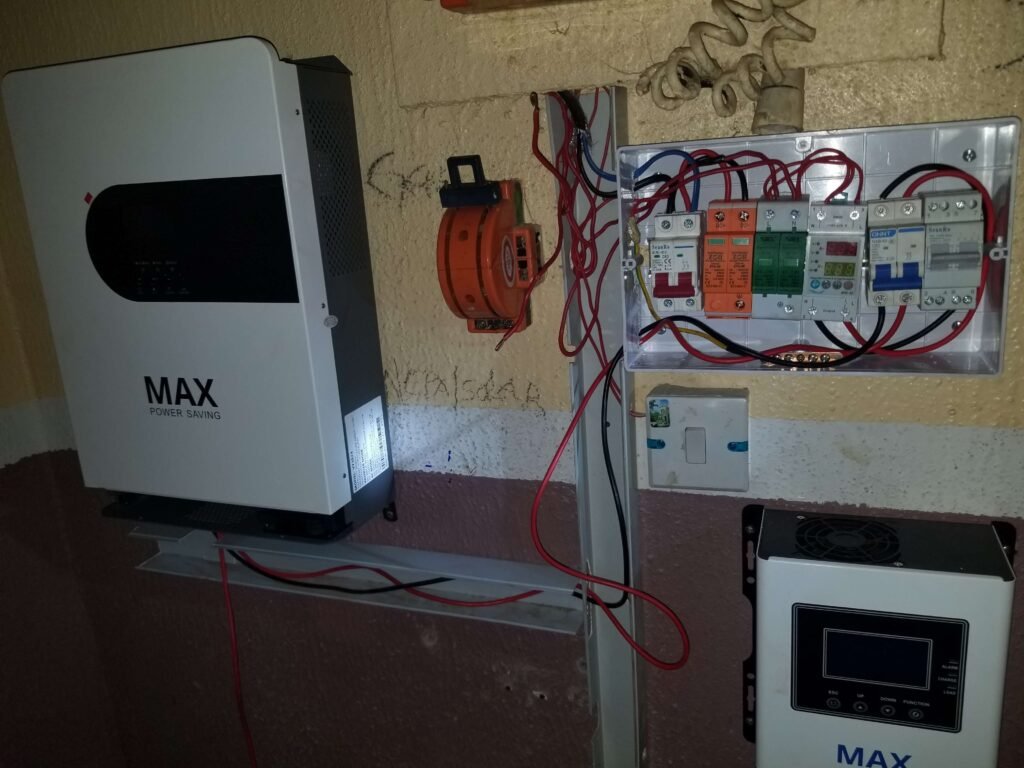
- Installation: Professional mounting and electrical connections
- Testing: Comprehensive system commissioning
- Training: Learning to operate and monitor your system
14. Financial Planning for Solar Investment
Budgeting Strategies
- Calculate current energy costs: Document monthly fuel and maintenance expenses
- Determine solar budget: Consider available funds and financing options
- Plan for contingencies: Set aside 10% extra for unexpected costs
- Consider expansion: Design systems that can grow with your needs
Return on Investment Calculation
Use this simple formula to calculate your solar ROI: Annual Savings ÷ Initial Investment × 100 = ROI Percentage
Most Nigerian solar installations achieve 25-40% annual ROI, far exceeding traditional investments.
Conclusion: The Clear Winner for Most Nigerians
After examining every aspect of this comparison, the evidence overwhelmingly favors solar panels for most Nigerian households and businesses. While generators may seem cheaper initially, the mathematics of long-term ownership clearly favor solar energy.
Solar panels win on:
- Long-term costs: Massive savings over system lifetime
- Reliability: Predictable power generation with battery backup
- Maintenance: Minimal upkeep requirements
- Environmental impact: Zero emissions and noise pollution
- Quality of life: Silent operation and clean energy
Generators remain viable only for:
- Temporary power needs
- Extremely low power requirements
- Emergency backup applications
- Situations with severe budget constraints
The transition from generators to solar panels represents more than just an energy decision – it’s an investment in your financial future, your family’s quality of life, and Nigeria’s environmental sustainability.
Your Path Forward: Making the Switch to Solar
If you’re convinced that solar panels are the right choice for your needs, here’s how to get started:
Step 1: Assess Your Energy Needs
- Document current power consumption: List all appliances and their usage hours
- Calculate total daily energy: Determine your kWh requirements
- Identify critical loads: Decide which appliances must always have power
- Plan for growth: Consider future power needs
Step 2: Evaluate Your Budget
- Calculate current energy costs: Add up fuel, maintenance, and repairs
- Determine available investment: Consider cash, financing, or payment plans
- Plan for ROI timeline: Understand your payback period expectations
Step 3: Choose the Right Partner
Don’t navigate this important decision alone. Partner with experienced professionals who understand Nigerian conditions and can design the perfect system for your needs.
Step 4: Take Action Today
Energy costs will only continue rising. Every month you delay the switch to solar is money lost to fuel expenses that could be eliminated forever.
Transform Your Energy Future with PA Digital Technologies
At PA Digital Technologies, we’ve helped hundreds of Nigerian families and businesses make the successful transition from noisy, expensive generators to clean, reliable solar power. Our certified engineers understand the unique challenges of Nigeria’s energy landscape and design solutions that work perfectly for our climate and conditions.
Why Choose PA Digital Technologies:
✅ Certified Professionals: Our technicians are trained and certified for Nigerian installations
✅ Quality Components: We use only premium panels, inverters, and batteries designed for tropical conditions
✅ Comprehensive Service: From initial assessment to long-term maintenance
✅ Proven Track Record: Hundreds of successful installations across Nigeria
✅ Transparent Pricing: Clear, upfront costs with no hidden fees
✅ Extended Warranties: Comprehensive coverage on all components and installation
✅ 24/7 Support: Round-the-clock monitoring and technical support
Our Services Include:
- Free Energy Audit: Comprehensive assessment of your power needs
- Custom System Design: Tailored solutions for your specific requirements
- Professional Installation: Certified technicians with quality guarantee
- Grid Integration: Hybrid systems that work with improved grid supply
- Maintenance Packages: Ongoing support to maximize system performance
- Monitoring Solutions: Real-time system performance tracking
- Financing Assistance: Help with payment plans and solar loans
We Serve All Major Nigerian Cities: Lagos, Abuja, Port Harcourt, Ibadan, Kano, Enugu, Benin City, Kaduna, Jos, Maiduguri, Warri, Calabar, Ilorin, Owerri, Uyo, and surrounding areas.
Ready to Start Saving Money and Enjoying Reliable Power?
Don’t spend another day throwing money into fuel tanks while enduring the noise and pollution of generators. Your solar system can be generating clean, free electricity within weeks of your decision to act.
Get Started Today: 📞 Call/WhatsApp: 07068853073
Free Services We Provide:
- Detailed energy audit and site assessment
- Custom system design with performance projections
- Comprehensive quotation with transparent pricing
- Financing options consultation
- Post-installation support planning
Contact PA Digital Technologies now and take the first step toward energy independence, financial savings, and a cleaner, quieter environment for your family or business.
The future of energy in Nigeria is solar – and that future starts with your decision today.